
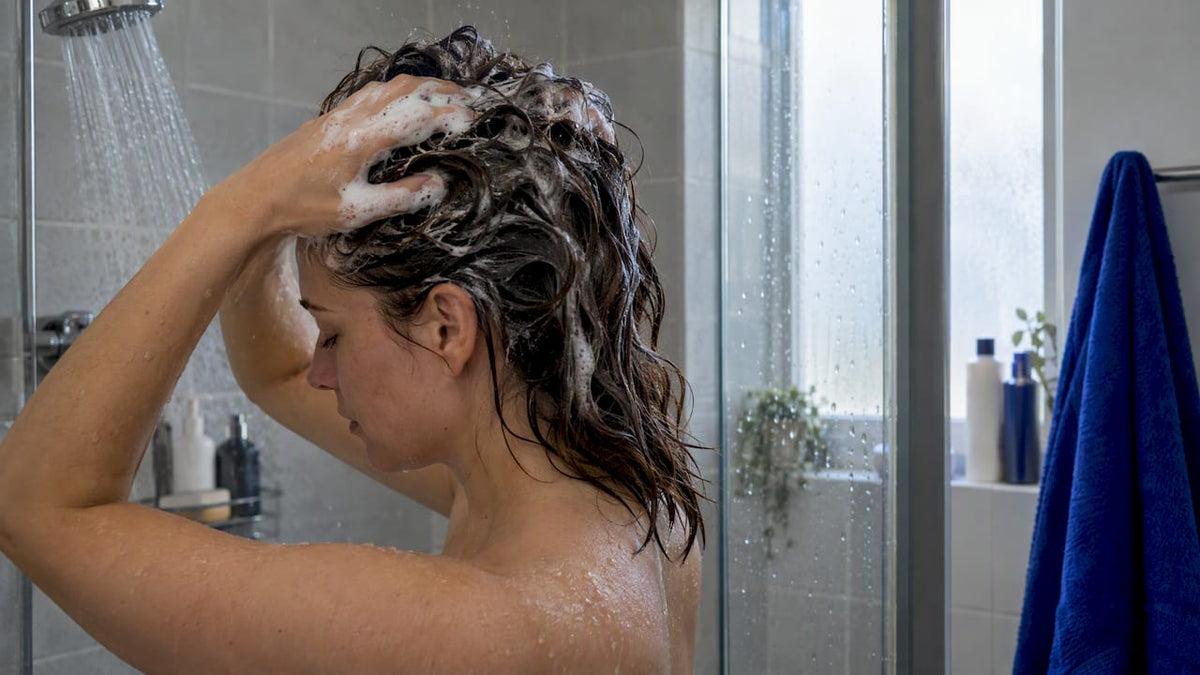
The fastest way to remove silicone buildup is a clarifying shampoo: a stronger cleanser that lifts the water-resistant coating that ordinary shampoo leaves behind. Wash your scalp well, let the lather run through the lengths, rinse thoroughly, then follow with a light conditioner or treatment. Most people only need to do this occasionally, not every wash.
Hair is personal, and so is the way it behaves. If yours has gone limp, dull or strangely resistant to conditioner, buildup is a likely suspect. This guide explains what is happening on the hair surface, how to reset it step by step, what to avoid, and how to keep your routine simple afterwards.
TL;DR
- Silicone buildup is a surface coating, not damage inside the hair. It is usually fixed with a clarifying shampoo, not with harsh home remedies.
- Not every silicone behaves the same. Non-water-soluble types such as dimethicone are the ones most likely to accumulate.
- Clarify only when you need to, then condition straight away with something lightweight. Stronger cleansing can strip conditioning oils too.
- Skip caulk removers, solvents, baking soda paste and neat vinegar. Choose a labelled, professional clarifying shampoo made for hair.
- Hard water minerals can look like buildup. A chelating formula is a different tool for a different job.
Table of Contents
- What silicone buildup actually is
- Signs your hair has silicone buildup
- How to remove silicone from hair, step by step
- Does clarifying shampoo remove silicone buildup?
- Which shampoo is best for removing buildup?
- What not to put on your hair
- Not every “cone” behaves the same
- Our view as a salon-grade haircare supplier
- How to stop silicone buildup coming back
- For kids, sensitive scalps and eco-conscious shoppers
- A reset-and-repair routine from ProHair
- FAQ
- Sources
What silicone buildup actually is
Silicones are ingredients that make hair feel slippery and look glossy. They are not automatically bad. A 2025 review of silicones in hair care describes their protective and conditioning properties and notes they can reduce friction and add shine.
The issue is accumulation. The University of Virginia’s chemistry of hair care overview explains that dimethicone does not dissolve in water and coats the cuticle, which can lead to polymer buildup. Because the film sits on the surface, normal shampoo may not shift it fully. Layer it with more conditioner, serum or heat protectant and the coating thickens.
The good news: this is a coating on the outside of the strand. It is not a problem in the follicle, and it does not mean your hair is permanently harmed.
Signs your hair has silicone buildup
No single sign proves it, but a cluster of these points the same way:
- Hair feels heavy, coated or waxy even right after washing.
- It looks shiny for a day, then goes flat and dull.
- Conditioner and treatments seem to sit on top rather than soften the hair.
- Curls drop, or straight hair will not hold a style.
- Colour looks muted because the surface is coated.
- Your hair felt great for the first few weeks of a new product, then gradually got worse.
If your scalp is itchy, flaky or sore, that is a different question. See a doctor or a trichologist rather than trying to fix it with a stronger shampoo.
How to remove silicone from hair, step by step
The approach below follows what the chemistry sources describe: stronger surfactants to carry away oily, water-resistant residue. USC’s explanation of shampoo formulation says cleansing depends on surfactants, and buildup-removing shampoos use stronger ones. Dow’s technical document on silicones in hair care states that silicones can be removed with a silicone-free clarifying shampoo.
- Start with dry or just-damp hair if the product directions allow it. Some clarifying formulas work better when applied to wet hair. Follow the label, because directions differ between products.
- Wet your hair thoroughly. Warm water, not hot. Hot water is harsh on the scalp and on colour.
- Apply a small amount of clarifying shampoo to the scalp. Massage with your fingertips for a minute or two. You are cleansing the scalp, so keep your attention there.
- Let the lather travel down the lengths. Do not scrub the ends. They are the oldest, driest part of your hair.
- Rinse well. Longer than feels necessary. Leftover cleanser is its own source of dryness.
- Repeat once if your hair still feels coated. Heavy buildup sometimes takes a second pass. Do not go beyond that in a single wash.
- Condition straight away. Use a lightweight conditioner or treatment on the mid-lengths and ends, then rinse.
That last step matters. The 2025 review and the University of Virginia both distinguish silicone’s smoothing role from the dryness that can come with excessive removal. A strong cleanse leaves hair open and bare, so replace moisture promptly, especially if your hair is damaged or colour-treated.
How long until it feels different?
Most people feel the change as soon as the hair is dry: lighter, bouncier, less slick. If it still feels coated after two passes, the cause may be something else, such as mineral deposits, a heavy oil or wax product, or simply very dry hair that needs a treatment.
Does clarifying shampoo remove silicone buildup?
For most non-water-soluble residue, yes. The same sources describe clarifying shampoo as the most sensible first-line option for established buildup. The trade-off is that it is a strong cleanser. It will take away the coating and some of the natural and added oils with it.
That is why frequency matters. There is no universal schedule, because it depends on how many styling products you use, how often you wash and how fragile your hair is. A practical way to work it out:
- Light product use, normal hair: clarify only when the signs above appear.
- Lots of serums, sprays and heat protectant: clarify occasionally, as part of a planned reset.
- Damaged, bleached or very dry hair: go gently, clarify less often and always follow with a treatment.
- Sensitive scalp: choose a labelled product, patch test if unsure, and stop if you get irritation.
Which shampoo is best for removing buildup?
The best choice depends on what is actually on your hair. Based on the research we reviewed:
| What you suspect | What usually helps | Watch out for |
|---|---|---|
| Stubborn dimethicone-type residue | A silicone-free clarifying shampoo | Dryness, so follow with conditioner |
| Light or water-soluble residue | A gentler regular shampoo, washed twice | Over-treating hair that does not need it |
| Hard-water mineral deposits as well | A chelating formula | Silicone and minerals are different problems |
| Colour-treated hair | A clarifying product used sparingly, then a treatment | Faster colour fade |
The mineral point is worth a moment. OhioLINK research on water hardness separates mineral uptake from product buildup and points to chelation and acidic treatment as the approaches for hard-water metals. If you wash with hard water and a clarifying shampoo does not fix the dullness, minerals could be part of the story.
If you are trying to choose between a clarifying and a detox shampoo, we explain the difference in our guide to clarifying vs detox shampoo.
What not to put on your hair
Search for this topic and you will find a lot of DIY advice. Some of it is sensible. Some of it is a bad idea.
Avoid:
- Silicone caulk removers, mineral spirits or other household solvents. They are not made for skin or hair.
- Baking soda paste. It is gritty and alkaline, and it can leave hair rough and dry.
- Neat vinegar. An undiluted acid is not something to pour on your scalp.
The NZ Environmental Protection Authority’s cosmetics fact sheet includes shampoo within the cosmetics category and says labels should carry ingredient and safe-use information. It also advises following the directions and stopping use if you have an allergic or other reaction. A shampoo made and labelled for hair gives you that information. A kitchen or garage product does not.
If you do react to anything, rinse thoroughly, stop using it and see your GP or pharmacist.
Not every “cone” behaves the same
You may have heard the advice to avoid every ingredient ending in “-cone”. The reality is more nuanced. According to the 2025 review, water-soluble or water-dispersible silicones wash away more readily, while non-water-soluble ones such as dimethicone are more likely to build up.
Dow’s document adds that deposition varies with the silicone type, the formula, conditioning polymers and how you wash. In other words, a salon professional looks at your whole routine rather than one ingredient on one label.
Two practical takeaways:
- Read the full ingredient list instead of trusting a “silicone-free” claim on the front. Our guide to reading shampoo labels walks through it.
- Silicone-free is not automatically better. If your hair is fine, a lightweight formula may suit you. If it is coarse, frizzy or heat-styled daily, a little slip can protect it.
Our view as a salon-grade haircare supplier
We supply products to over 500 salon accounts across New Zealand, so we hear the same story at the basin again and again. Someone buys a good conditioner, adds a serum, a heat protectant and a styling cream, and a month later their hair feels heavy. The answer is rarely “throw everything out”. It is usually “reset, then simplify”.
Here is what we suggest:
- Reset once, properly. Use a clarifying shampoo, rinse well and condition. Do not clarify daily in the hope that more is better.
- Treat the ends after the reset. A clarified head of hair is a clean slate. It is the best time to use a repair or hydration treatment, because nothing is sitting in the way.
- Use fewer layers. Pick one leave-in, one heat protectant and one finishing product, and use small amounts. Most buildup is a quantity problem.
- Match the routine to the hair. Colour-treated, damaged and sensitive-scalp hair all need a gentler hand than hair that has never been processed.
- Look at the label, not the buzzwords. The EPA is clear that natural claims do not replace checking ingredients and safety information, and the same applies to silicone-free claims.
We built our range around simple, effective routines that suit busy people, because nobody wants a ten-step process on a Tuesday morning.
— Burgs
How to stop silicone buildup coming back
Once your hair is clear, a few habits keep it that way.
Use less, more evenly
A pea-sized amount of serum or a few sprays of finishing product goes a long way. Concentrate on the ends and keep products off the scalp and roots, where they are most likely to weigh hair down.
Wash properly
Shampoo the scalp, condition the lengths. Rinse until the water runs clear and the hair no longer feels slippery in a way it should not.
Rotate, do not stack
If you use a lot of styling, rotate your products rather than layering a new one on top of yesterday’s. Our second-day styling routine shows how to refresh hair between washes without piling on more product.
Protect colour while you clarify
Stronger cleansing can speed up colour fade. If you have coloured hair, space clarifying washes out, and read our colour fade routine for timing tips. Blondes using toning products can also look at our guide to purple shampoo frequency.
Be kind to fragile hair
If your hair is breaking as well as feeling coated, buildup may not be the main issue. Our article on what causes hair breakage covers the common causes and what to change.
For kids, sensitive scalps and eco-conscious shoppers
Children. Children rarely need to clarify. If a child’s hair seems coated, a thorough wash with their usual shampoo is a better start. Use a labelled cosmetic from a reputable retailer, follow the directions, keep it out of the eyes and stop if irritation occurs. The EPA’s cosmetics guidance points to the label for ingredients, hazards and safe-use information.
Sensitive scalps. A strong cleanser is more likely to sting or dry out a sensitive scalp. Use it less often, rinse well and talk to a pharmacist or doctor if irritation persists.
Eco-conscious choices. “Natural” is not proof of safety or performance. The 2025 review discusses environmental concerns around some cyclic silicones and newer alternatives, which is a good reason to check ingredients rather than rely on marketing. If polymers on a label confuse you, our piece on microplastics in haircare explains what to look for.

A reset-and-repair routine from ProHair
If you want to do this properly, you need three things: a clarifying shampoo, a conditioner or treatment to follow, and a lighter styling routine afterwards.
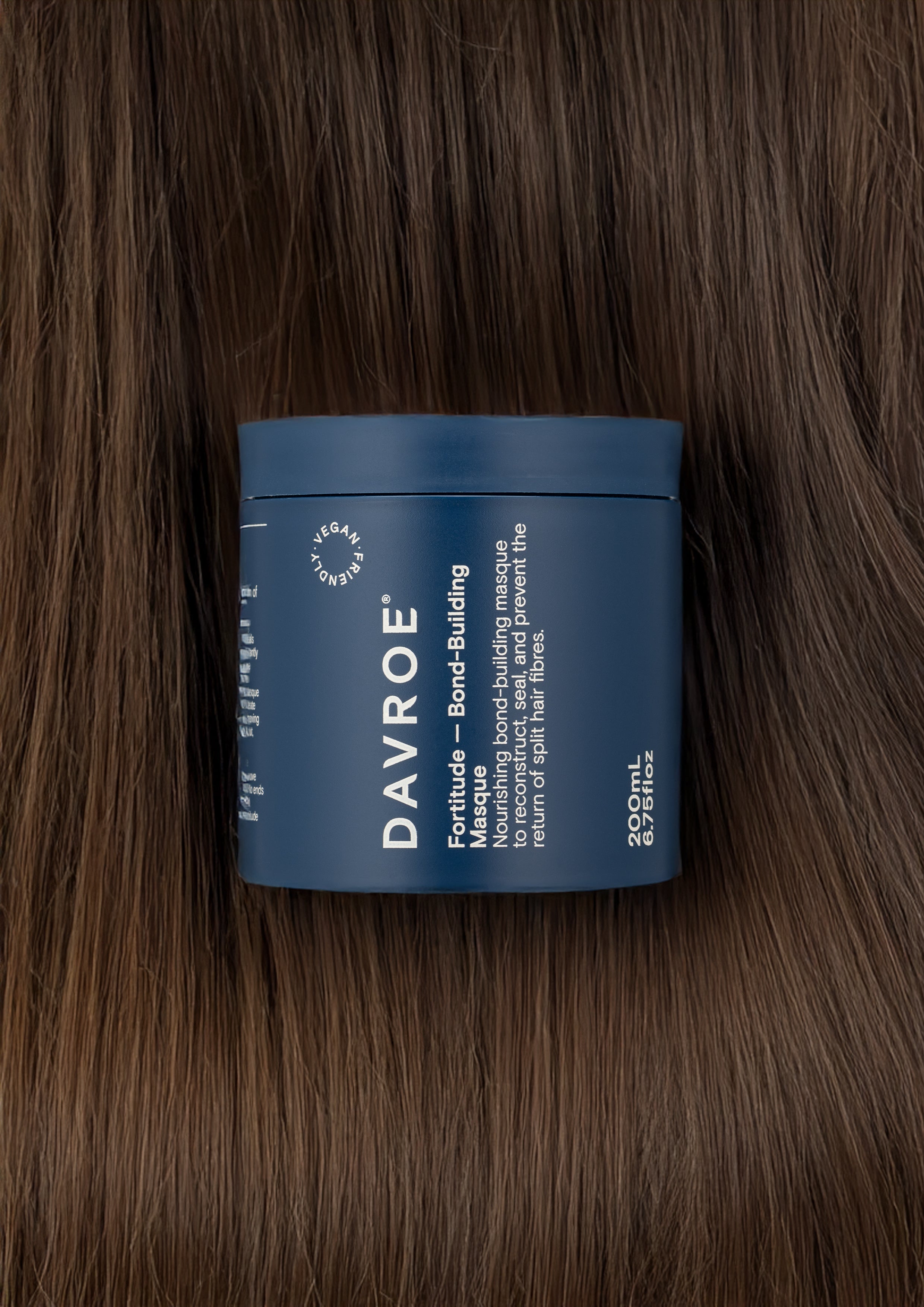
- Clarify: our Clarify Deep Cleansing Shampoo from Davroe Professional is a salon-grade option for a deep cleanse. Check the label and directions on the product page before use.
- Replace moisture: browse our professional hair treatments for repair and hydration for something to use straight after.
- Everyday care: our shampoo and conditioner range covers dry, damaged, colour-treated, frizzy and sensitive-scalp hair.
- Finish lightly: see our styling and finishing products and pick one, not four.
We ship nationwide from a local warehouse, and shipping is free on orders over $100. You can start at ProHair and shop now.
FAQ
Does clarifying shampoo remove silicone buildup?
Yes, for most non-water-soluble residue such as dimethicone. Clarifying shampoos use stronger surfactants that carry away the coating. Because they can also strip conditioning oils, follow with a lightweight conditioner or treatment.
What is the best shampoo to remove silicone buildup from hair?
A silicone-free clarifying shampoo is the strongest quick reset for stubborn residue. Light buildup may only need a gentler shampoo used twice. If you also have hard water, a chelating formula may help with the mineral side.
How can I remove silicone buildup from my hair at home?
Use a clarifying shampoo on the scalp, let the lather run through the lengths, rinse well and condition. Avoid household solvents, baking soda paste and neat vinegar. If irritation or ongoing scalp problems appear, see your GP or pharmacist.
How often should I clarify my hair?
There is no single rule, because it depends on your products, wash frequency and hair condition. Clarify when you notice the signs, and less often if your hair is damaged, bleached or colour-treated. Always follow with a treatment.
Is silicone bad for my hair?
Not automatically. Silicones reduce friction, add shine and protect the surface of the hair. The concern is residue that accumulates, so manage your routine and cleanse when needed.
Sources
- With or without Silicones? A Comprehensive Review of Their Role in Hair Care (PMC, 2025)
- Chemistry of Wellness: Hair and Hair Care (University of Virginia)
- Shampoo Formulation: Perception and Reality (USC Viterbi, Illumin)
- The Beauty of Silicone in Hair Care Application (Dow)
- OhioLINK ETD: Evans, Amber O.
- Cosmetics fact sheet (NZ Environmental Protection Authority)