
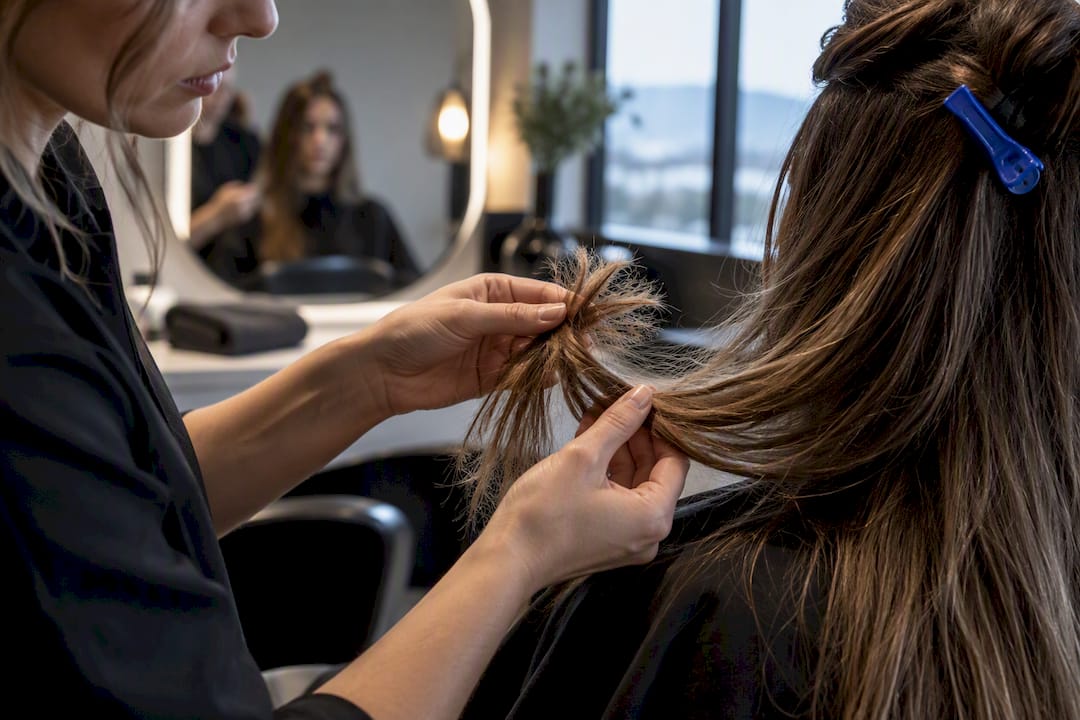
Hair breakage happens when the hair shaft weakens and snaps along its length, not at the root, which is what separates it from hair loss caused by the follicle shutting down. The fix starts with a simple triage step: stop whatever is actively stressing the hair right now, whether that’s daily heat styling or a tight ponytail, before you try to diagnose the deeper cause. The rest of this guide walks through exactly what’s behind the damage and what actually helps.
TL;DR:
- Mechanical stress from brushing dry hair or tight hairstyles often causes surface damage that leads to internal weakening and eventual snapping.
- Heat and chemical treatments damage the hair’s protein bonds and cuticle, making strands more porous and prone to breakage when overused or spaced too closely.
- Environmental factors like hard water, UV exposure, and dry indoor air strip moisture, reducing hair elasticity and increasing fragility.
- Poor diet and health issues, including low iron or thyroid problems, can weaken hair structure and cause brittle, breakage-prone strands.
- Immediate damage prevention involves pausing heat styling, switching to gentle detangling, and trimming split ends, followed by tailored repairs over several weeks.
Table of Contents
- What’s causing your hair breakage? A quick self-check
- How does brushing and styling cause mechanical hair breakage?
- Can heat styling and colouring make hair break more easily?
- Why do dryness and the weather make hair snap?
- Can diet or a health condition cause hair to break?
- What’s the best routine to stop and repair hair breakage?
- How salon-grade products fit into your repair routine
- A stylist’s view on diagnosing hair breakage
- Shop the ProHair repair starter kit
- Sources
- FAQ
What’s causing your hair breakage? A quick self-check
Before you overhaul your entire routine, it helps to narrow down which category of damage you’re dealing with. Most breakage traces back to one of five overlapping causes, and a quick mental audit of your last few months usually points to the culprit.
- Mechanical stress — brushing dry hair, tight ponytails, hair ties without covers, or extensions pulling at the roots.
- Heat and chemical damage — daily straightening or curling, recent colour, bleach, or a relaxer service.
- Dryness and environment — hard water, harsh sun exposure, or heated indoor air stripping moisture.
- Diet and health factors — recent rapid weight loss, low iron, or a new thyroid diagnosis.
- Grooming habits — over-washing, rough towel drying, or using the wrong shampoo for your hair type.
If you’ve had a colour appointment in the last month and your ends feel like straw, thermal and chemical damage is the likely driver. If breakage clusters near your hairline or crown, tension from styling is worth investigating first. Each of these gets its own detailed breakdown below, so you can match your symptoms to the right fix instead of throwing every product at the problem at once.
How does brushing and styling cause mechanical hair breakage?
Every time hair rubs against something rough, whether that’s a towel, a tight elastic, or your own brush bristles, the outer cuticle layer lifts and roughens. Enough friction and the cuticle wears away entirely, exposing the softer inner cortex underneath. That’s when a single split travels up the shaft and eventually snaps.
Wet hair is especially vulnerable to this kind of friction damage, which is why rough towel-drying is one of the most common and easily avoidable causes of breakage.
The usual offenders:
- Brushing dry, tangled hair from the roots down instead of the ends up.
- Rubbing hair vigorously with a bath towel after washing.
- Wearing tight elastics, especially uncovered rubber bands, in the same spot every day.
- Carrying heavy clip-in or tape extensions that pull on fine strands near the hairline.
Pro Tip: Detangle hair while it’s still coated in conditioner, working from the ends upward with a wide-tooth comb. The slip from the conditioner lets the comb glide through knots instead of snapping them.
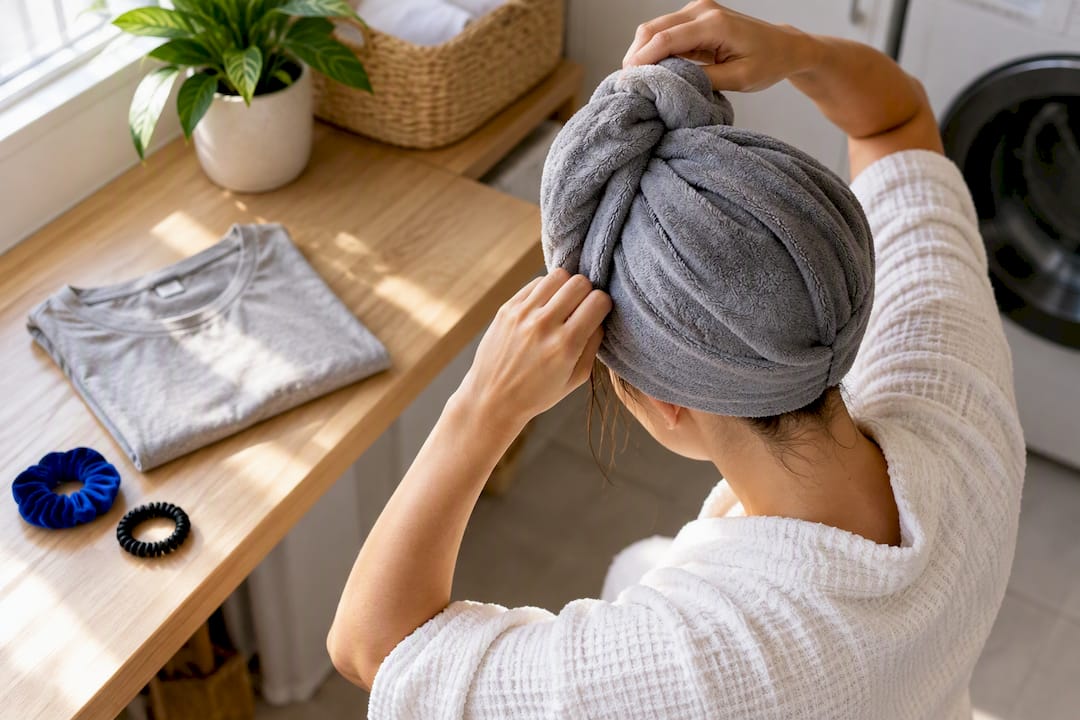
Swap rough towels for a microfibre wrap or an old cotton t shirt, and choose covered elastics over bare rubber bands wherever possible.
Can heat styling and colouring make hair break more easily?
Heat and chemical services attack hair at a structural level. Styling tools disrupt the protein bonds that give each strand its strength, while colour, bleach, and relaxers alter the cuticle and can leave hair permanently more porous. Repeated exposure without recovery time is what pushes healthy hair into breakage territory.
Peer-reviewed research on hair damage mechanisms shows that heat and chemical treatments disrupt the cuticle and the internal protein bonds that give hair its elasticity, which is exactly why over-processed hair snaps instead of stretching. In extreme cases, excessive heat can even cause “bubble hair,” where trapped steam inside the shaft deforms it under the cuticle.
Watch for these warning signs that heat or chemicals are behind your breakage:
- Hair feels brittle and dry along the mid-lengths, not just at the very ends.
- One section grows noticeably shorter than the rest.
- Texture changes unexpectedly after a colour or relaxer service.
- Hair loses its usual bounce and snaps rather than stretches when pulled gently.
The American Academy of Dermatology recommends lowering tool temperatures, always using a heat protectant, and spacing chemical services roughly 8 to 10 weeks apart where possible. Bond-building treatments help, but they work best as an occasional reset rather than a weekly habit.
Why do dryness and the weather make hair snap?
Moisture is what gives hair its elasticity, the ability to stretch under tension without breaking. When that moisture is stripped away, hair loses flexibility and starts to snap under normal handling, even a gentle brush stroke.
A handful of environmental factors quietly drain that moisture over time:
- Hard water leaves mineral deposits on the hair shaft that make it feel rough and porous.
- UV exposure breaks down the protein structure much like heat styling does.
- Cold, dry winds and indoor heating both pull moisture out of the cuticle.
Combat this with an occasional clarifying or chelating wash to lift mineral buildup, a richer conditioner in colder months, and a leave-in with UV filters if you spend a lot of time outdoors. Reader tips on building humidity-proof hair cover seasonal adjustments worth trying if your climate swings between extremes.
Can diet or a health condition cause hair to break?
Hair is a low priority tissue for the body, so when nutrition or health takes a hit, hair is often one of the first places it shows. Diets low in protein, iron, zinc, or essential fatty acids commonly show up as brittle, slow-growing strands, because the body redirects limited resources away from hair production first.
Nutrition guidance from the ISHRS notes that biotin only helps where an actual deficiency exists. It isn’t a universal fix, and taking more than your body needs won’t strengthen already healthy hair.
A few medical flags are worth taking seriously:
- Sudden, diffuse thinning alongside fatigue or weight changes can point to hypothyroidism.
- Rapid weight loss or disordered eating patterns often trigger a temporary shedding phase called telogen effluvium.
- Persistent brittleness despite a good haircare routine and gentle handling deserves a proper check-up.
If breakage persists after ruling out heat, chemicals, and mechanical stress, see a GP or dermatologist. Iron studies and thyroid function tests are the two most commonly ordered checks, alongside a general dietary review.
What’s the best routine to stop and repair hair breakage?
Repairing broken hair follows a logical order: stop the damage first, correct daily habits second, then rebuild strength over weeks, not days. Clinical reviews note that structural hair damage can’t be fully reversed, so the real goal is halting further breakage while new, healthier growth replaces what’s already compromised.
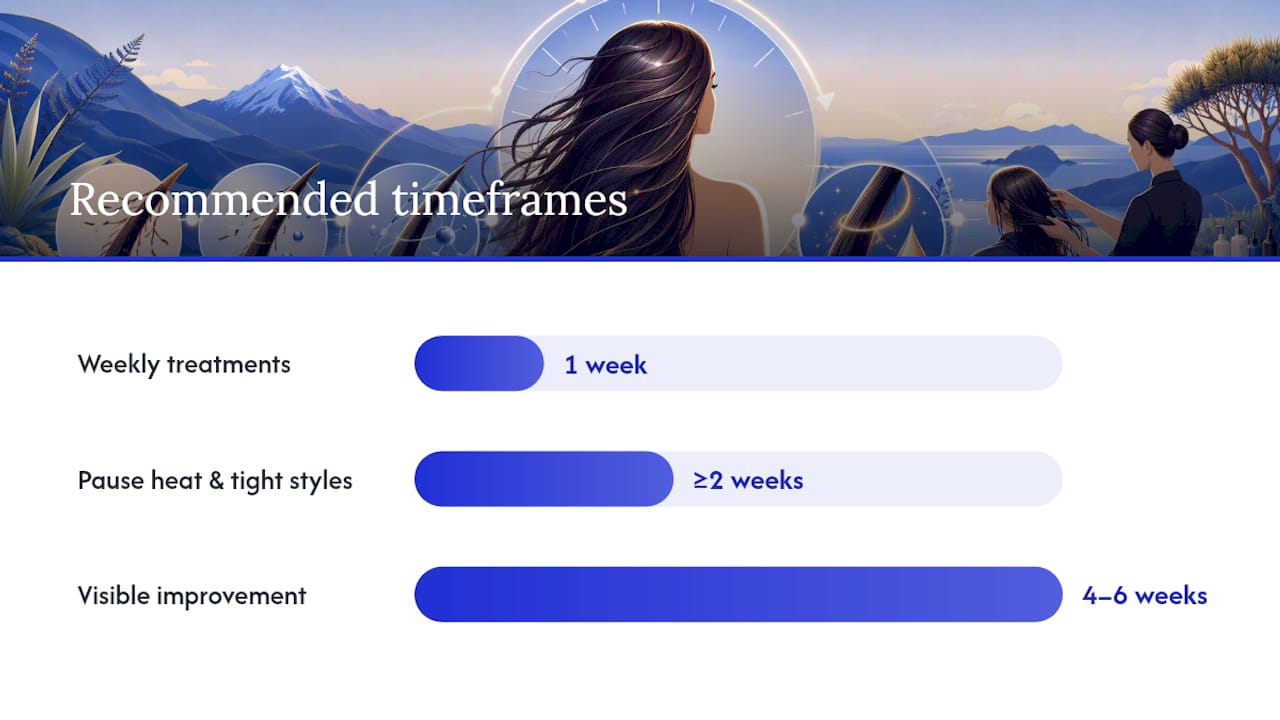
- Immediate triage. Pause heat styling and tight hairstyles for at least two weeks. Book a trim to remove split ends before they travel further up the shaft.
- Fix your daily handling. Wash only as often as your scalp needs (over-washing strips natural oils), apply conditioner mid-length to ends, and always detangle before the hair fully dries.
- Rebuild with weekly treatments. Add a deep-conditioning mask or protein treatment once a week, depending on what your hair needs.
- Reintroduce heat and colour slowly. Once breakage has visibly slowed, bring back styling tools at lower settings, always with a protectant, and space chemical services further apart than before.
Pro Tip: If you can’t tell whether your hair needs protein or moisture, do a simple stretch test on a strand. Hair that stretches and springs back is healthy; hair that stretches then stays limp or snaps immediately usually needs a moisture-focused approach rather than more protein.
Overusing protein treatments on hair that’s already protein-rich can leave it stiff and more prone to snapping, so balance is the goal rather than more treatment being automatically better. Expect visible improvement in manageability within four to six weeks, but real structural recovery tracks with new growth, which means months, not days.
How salon-grade products fit into your repair routine
Salon-grade formulas earn their price by targeting a specific job, repair or maintenance, rather than trying to do everything in one bottle. Picking the right treatment starts with knowing which one your hair actually needs this week.
A simple at-home protocol looks like this:
- Cleanse gently with a sulphate-light shampoo suited to your hair type.
- Balance protein with a protein rebuilder if your stretch test shows limpness rather than snapping.
- Deep condition weekly using a rinse-out treatment like Davroe’s CURLiCUE deep conditioning rinse to restore moisture and slip.
- Seal with a leave-in such as an ends repair leave-in treatment to protect ends between washes.
- Detangle with the right tool, a wide-tooth comb rather than a fine-bristle brush, to minimise friction on fragile strands.
This isn’t about buying every product on the shelf. It’s about matching the treatment to what your hair is actually telling you it needs.
A stylist’s view on diagnosing hair breakage
Behind the chair, diagnosing breakage starts with a stretch and porosity test, checking how far a strand extends before it springs back or snaps, and asking about recent colour, heat habits, and any styling tension near the hairline. That quick assessment usually tells a stylist within minutes whether the fix is a protein treatment, a moisture routine, or simply a trim.
Breakage patterns are diagnostic in their own right: snapping concentrated at the crown often points to tension or heat applied too close to the roots, while even brittleness across the whole length usually signals something environmental or nutritional. Realistic timelines matter here too. Manageability improves within weeks, but genuinely rebuilt strength tracks with new growth, so patience is part of the protocol, not a failure of it. Where breakage is severe and structural, trimming beats trying to rebuild hair that’s already too compromised to hold a treatment.
— Burgs
Shop the ProHair repair starter kit
If your stretch test and cause checklist point to genuine structural damage rather than a one-off bad hair day, You can access salon-grade formulas trusted by many New Zealand salon accounts without booking an appointment to get them. That matters most for breakage, where consistency over weeks beats a single expensive salon treatment.
Start with a repair treatment to address structural damage, then pair it with a shampoo and conditioner matched to your hair’s protein or moisture needs. Round out the kit with a detangling comb or microfibre wrap to cut down on the mechanical friction that undoes good product work. Free shipping is available on larger orders, which makes it easy to build out the full routine in one go rather than piecing it together over several months. Head to Prohair’s full range to put together a kit matched to what your stretch test told you.
Sources
- Hair breakage: Common causes, types, repair, and prevention
- What Causes Hair Breakage—And How to Repair It | Vogue
- PMC article on hair damage mechanisms (NCBI)
FAQ
How do I stop breakage in hair?
Stop the mechanical or heat stress causing the damage first: pause heat tools, avoid tight styles, and switch to gentle detangling on conditioned hair. Follow up with a deep-conditioning or protein treatment matched to what your stretch test shows your hair needs, and trim off any existing split ends so they can’t travel further up the shaft.
What vitamin deficiency causes hair to break?
Low iron, zinc, and inadequate protein intake are the most common nutritional shortfalls linked to brittle, breakage-prone hair. Biotin only helps where a genuine deficiency exists, so it isn’t a universal fix for hair that’s breaking due to heat or mechanical damage.
What is my body lacking if my hair is breaking?
Breaking hair alongside fatigue, weight changes, or slow growth can point to low iron, inadequate protein, or an underlying thyroid issue. A GP visit with iron studies and thyroid function tests is the most reliable way to find out what’s actually behind it, rather than guessing with supplements.
Will hair breakage grow back?
Hair that has already broken along the shaft won’t repair itself, since structural damage to hair is not reversible once it happens. New growth coming in healthy, combined with trimming away the damaged length, is what restores the appearance of full, strong hair over time.