
Getting humidity proof hair comes down to six things: the right shampoo, a cuticle-sealing leave-in, a proper drying technique, a finishing spray, a protective style for bad days, and a quick-fix tool in your bag. Do all six consistently, and frizz stops being a daily battle.
Here’s your immediate action checklist:
- Choose a hydrating or smoothing shampoo — dry, porous hair absorbs environmental moisture faster, so a moisturizing formula reduces that uptake from the first wash.
- Apply a leave-in conditioner or serum while hair is still damp — this seals the cuticle before it has a chance to lift and grab moisture from the air.
- Dry hair fully before you go outside — partially dry hair is the most vulnerable state; even a short blast of humid air can undo a style before it sets.
- Finish with an anti-humidity hairspray — look for labels that say “humidity protect” or a frizz control lasting throughout the day to add a polymer barrier over your style.
- Pin or braid hair on high-humidity days — protective styles physically limit how much surface area is exposed to moisture-laden air.
- Keep a small serum or oil in your bag — a single drop smoothed over flyaways mid-day resets the seal without weighing hair down.
Pro Tip: A microfibre towel instead of a regular terry cloth towel is one of the fastest upgrades you can make. Terry cloth roughens the cuticle as it dries; microfibre absorbs water with far less friction, which means less frizz before you even reach for a product.
Key Takeaways
Sealing the cuticle at every wash, choosing the right formula for your hair type, and finishing with a humidity-resistant spray are the three steps that make the biggest difference to frizz-free hair in humid conditions.
| Point | Details |
|---|---|
| Seal the cuticle every wash | Apply a leave-in conditioner to damp hair after every wash to slow moisture uptake. |
| Match formula to hair type | Use hydrating formulas for dry or damaged hair; choose lightweight volumizing options for fine hair. |
| Cool shot closes the style | Finish every blowout with 10–15 seconds of cool air to lock the cuticle before applying finishing spray. |
| Read labels carefully | Look for “humidity protect,” “24H frizz control,” or “anti-frizz polymers” when choosing a finishing spray. |
| Prohair for salon-grade results | Prohair carries smoothing, hydrating, and curl-specific formulas trusted by over 500 salon accounts. |
Table of Contents
- How do you choose shampoo and conditioner for humidity-prone hair?
- Which treatments and leave-ins actually seal the cuticle?
- What styling techniques hold up in humid conditions?
- What ingredients help with frizz and which ones make it worse?
- How do you fix flyaways and frizz on the go?
- How does your hair type change what you need to do?
- When should you deep-condition, clarify, and refresh your style?
- Why does sealing the cuticle matter, and how do you do it without weighing hair down?
- A practical daily routine worth following
- Prohair’s salon-grade picks for a humidity-proof routine
- Sources
How do you choose shampoo and conditioner for humidity-prone hair?
The quick rule: reach for a hydrating formula when your hair is dry, damaged, or color-treated, and choose a lightweight volumizing formula when your hair tends to go flat in humidity rather than frizzy.
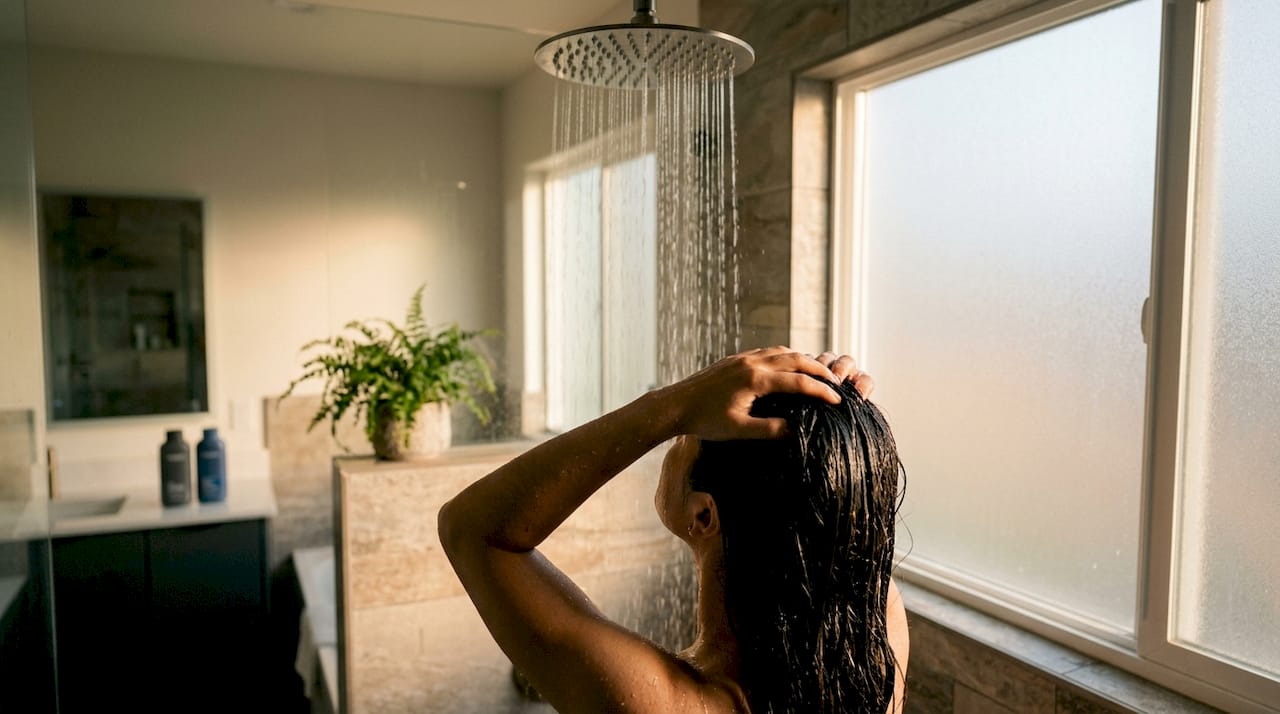
Hydrating shampoos deposit moisture and smooth the cuticle on wash day, which reduces the hair’s hunger for environmental moisture later. Volumizing options, like a fine hair shampoo, keep strands lifted without the weight that causes limpness in humid air.
Ingredients to look for:
- Glycerin and panthenol — humectants that draw moisture into the strand (beneficial in moderate humidity; use sparingly in very high humidity)
- Hydrolyzed proteins — temporarily fill gaps in the cuticle to reduce porosity
- Silicones (dimethicone, cyclomethicone) — form a water-resistant film over the strand
Ingredients to limit:
- Drying alcohols (SD alcohol, alcohol denat.) — strip moisture and leave the cuticle rough
- Sulfates (sodium lauryl sulfate) in daily use — over-cleansing removes the natural oils that protect against humidity
On clarifying frequency: most people need a clarifying shampoo once or twice a month, not weekly. If you use silicone-based products regularly, monthly clarifying prevents buildup that can make hair feel heavy and dull. Between clarifying sessions, a gentle sulfate-free formula keeps the scalp balanced without stripping.
Pro Tip: If your hair feels coated or your leave-in stops absorbing properly, that’s the signal to clarify. You don’t need a calendar reminder — your hair will tell you.
Which treatments and leave-ins actually seal the cuticle?
The most effective cadence is a weekly deep-conditioning mask plus a leave-in after every single wash. The mask replenishes moisture and flexibility; the leave-in creates a surface barrier that slows how quickly humidity can re-enter the strand.
Stylists consistently recommend sealing the cuticle as the primary defense against humidity-driven frizz. A raised or damaged cuticle is essentially an open door for moisture. Weekly treatments close that door.
Treatment types and what they do:
- Deep-conditioning masks — restore moisture balance and soften the cuticle; use weekly on dry or damaged hair, every two weeks on healthy hair. A deep conditioning rinse works well as a regular weekly step.
- Protein treatments — temporarily reinforce the hair shaft by filling structural gaps; best for chemically treated or heat-damaged hair. A protein rebuilder targets this specifically.
- Leave-in conditioners — applied to damp hair, they extend the conditioning effect and prep the strand for styling products.
- Lightweight oils and serums — applied to wet hair, they seal moisture in and add a light hydrophobic layer. A hydrating curl oil works for this on textured hair.
Protein vs. moisture balance: too much protein without enough moisture makes hair feel stiff and brittle; too much moisture without protein leaves it limp and stretchy. If your hair snaps easily when wet, it needs protein. If it stretches without snapping and feels mushy, it needs moisture.
Pro Tip: Test a strand before committing to a full treatment. Wet a single strand, stretch it gently, and release. Snaps quickly? Add protein. Stretches a long way before snapping? Add moisture. This takes 10 seconds and saves you from weeks of overcorrection.
What styling techniques hold up in humid conditions?
A humidity-resistant blowout follows a clear sequence. Vogue’s blowout checklist identifies shampoo choice, cuticle prep, and a finishing spray as the three non-negotiable steps.
Step-by-step routine:
- Start on damp, not soaking, hair — excess water prolongs drying time and increases heat exposure.
- Apply a heat protectant and leave-in — the protectant shields the cuticle from structural damage; the leave-in adds slip and a moisture barrier.
- Rough-dry to about 80% with a concentrator nozzle — the nozzle directs airflow down the hair shaft, smoothing the cuticle rather than ruffling it.
- Section and finish with a round brush — work in sections from the nape up, keeping the dryer moving to avoid heat buildup in one spot.
- Use the cool shot — once each section is dry, blast it with cool air for 10–15 seconds. Dyson’s guidance confirms that finishing with cool air closes the cuticle and locks the style.
- Finish with a humidity-resistant spray — apply while hair is still slightly warm so the polymers bond to the surface.
Tool notes:
- A concentrator nozzle is non-negotiable for straight or wavy styles; it prevents the scattered airflow that causes frizz.
- A diffuser is the better attachment for curly and coily hair; it distributes heat evenly without disrupting the curl pattern.
- A paddle brush works for long, straight styles; a round brush gives lift and tension for a blowout shape.
Pro Tip: Avoid touching your hair while it cools. The style sets in the first 30–60 seconds after the cool shot. Running fingers through it during that window breaks the cuticle seal you just created.
What ingredients help with frizz and which ones make it worse?
Humidity-resistant hair products work by either sealing the cuticle, adding a hydrophobic barrier, or both. Pantene’s guidance explains that when ambient humidity exceeds the moisture level inside the hair shaft, hair absorbs environmental moisture and frizzes. The right products slow that process.
| Category | Effect | When to Use |
|---|---|---|
| Silicones (dimethicone) | Strong hydrophobic seal; blocks moisture entry | Straight, wavy, or damaged hair needing maximum frizz control |
| Silicone-free polymers (PVP, VP/VA copolymer) | Lighter seal; adds hold without buildup | Fine or volume-conscious hair |
| Lightweight oils (argan, camellia) | Softens and adds surface hydrophobicity | All types; apply to damp hair |
| Glycerin (high humidity) | Draws moisture in — can worsen frizz in high humidity | Use in moderate humidity only |
| Drying alcohols (SD alcohol) | Strips moisture; roughens cuticle | Avoid in frizz-prone routines |
| Anti-humidity hairsprays | Polymer barrier over finished style | Final step on any style |
Shopping checklist — phrases to look for on labels:
- “Humidity protect” or “humidity resist”
- a frizz control lasting throughout the day
- “Anti-frizz polymers” or “flexible hold”
- “Silicone-free” (if you need volume)
- “Hydrophobic” or “moisture barrier”
Phrases that signal caution:
- “Alcohol” listed in the first five ingredients
- “Volumizing” formulas used on already-dry, frizzy hair (they add lift but not seal)
In very humid climates or summer months, look for formulas that use lower concentrations of glycerin or pair it with a sealing silicone or oil.
How do you fix flyaways and frizz on the go?
Fast fixes matter because humidity doesn’t follow a schedule. These six work without a full restyle:
- A drop of lightweight oil or serum — warm it between your palms, smooth over the surface layer only. Works on all hair types; avoid the roots.
- Clear mascara on flyaways — a clean mascara wand loaded with clear gel tames individual strands without product buildup. Stylists recommend this as one of the fastest flyaway fixes available.
- Micro-mist anti-humidity hairspray — a light pass from 12 inches away refreshes the polymer barrier without stiffness.
- A soft toothbrush with a tiny amount of pomade — press flyaways flat along the hairline; the bristles give precision that fingers can’t.
- Protective pinning — a loose bun, braid, or twist removes the style from humidity exposure entirely and often looks intentional.
- A microfibre wrap — if you get caught in rain or sweat, blotting with microfibre instead of rubbing limits the cuticle damage that causes rebound frizz.
Pro Tip: Make a diluted refresh spray at home: fill a small travel bottle with water, add two or three drops of a lightweight leave-in conditioner, and shake. Mist lightly over frizzy sections and smooth with your palms. It reactivates the leave-in without the buildup of a second full application.
How does your hair type change what you need to do?
Texture and porosity are the two primary decision drivers. Porosity tells you how easily moisture enters and exits the strand; texture tells you how much product weight the hair can carry without going limp.
Quick porosity test: drop a clean, dry strand into a glass of room-temperature water. If it sinks quickly, you have high porosity (absorbs moisture fast, loses it fast). If it floats, you have low porosity (resists moisture entry, but once humid air gets in, it stays). Medium porosity floats briefly then sinks slowly.
| Hair Type | Porosity Tendency | Key Routine Tweaks |
|---|---|---|
| Fine, straight | Low to medium | Lightweight leave-in only; silicone-free polymers; avoid heavy oils on roots |
| Wavy | Medium | Balanced moisture and hold; diffuse or air-dry; light serum on mid-lengths |
| Curly | Medium to high | Weekly mask; rich leave-in; curl cream or oil to seal; diffuse on low heat |
| Coily | High | Deep condition weekly; layer leave-in + oil + cream (LOC method); avoid drying alcohols |
| Coarse, straight | Medium to high | Hydrating shampoo; smoothing conditioner; silicone-based serum for blowouts |
Pro Tip: Working with your natural texture, rather than against it, is the single most reliable advice stylists give for humid conditions. Forcing a sleek finish on naturally curly hair usually means the style reverts the moment you step outside. Embrace a defined curl or wave instead, and humidity becomes far less of an issue.
When should you deep-condition, clarify, and refresh your style?
A simple maintenance schedule prevents the buildup and moisture imbalance that make hair more vulnerable to humidity over time.
- Daily: Apply a light oil or serum to dry ends if needed; refresh flyaways with a micro-mist spray. Anti-humidity products typically need reapplication after 8–12 hours in high-humidity conditions.
- Every wash (2–3 times per week for most): Use a leave-in conditioner on damp hair before styling. This is the single most consistent step for maintaining a smooth cuticle.
- Weekly: Use a deep-conditioning mask or treatment for 10–20 minutes before rinsing. Pantene’s guidance confirms that conditioners and sealing products slow how quickly hair absorbs environmental moisture, making weekly conditioning a direct defense against frizz.
- Monthly (or as needed): Clarify with a clarifying shampoo to remove silicone and product buildup. Buildup blocks moisture from penetrating during conditioning, which creates a false sense of smooth hair that collapses in humidity.
- Seasonally: Reassess your routine as humidity levels shift. Summer months in humid climates may call for heavier sealing products; drier winter months often need more moisture and less hold.
Consistency matters more than any single product. A routine you do every wash day outperforms a once-a-month intensive treatment every time.
Why does sealing the cuticle matter, and how do you do it without weighing hair down?
The cuticle is the outermost layer of the hair shaft, made up of overlapping scales. When those scales lie flat, hair reflects light, resists moisture, and holds a style. When they’re raised or damaged, the hair absorbs moisture unevenly and frizzes. That’s the entire mechanism behind humidity-driven frizz, and it’s why every effective anti-frizz routine targets the cuticle first.
Stylists draw a clear line between silicones and silicone-free polymers. Silicones (dimethicone, amodimethicone) create a strong, durable seal and are excellent for straight or damaged hair. For fine or volume-conscious hair, silicone-free polymers like PVP or VP/VA copolymer smooth the cuticle without the weight or buildup that can deflate a style over time.
Stylist consensus, reported by Byrdie: the most reliable approach to humidity-resistant hair is to get the cuticle lying flat, work with your natural texture, and use targeted serums or oils alongside weekly masks. Forcing a finish that fights your hair’s natural pattern usually leads to faster reversion and more frizz, not less.
Pro Tip: Before committing a new serum or treatment to your whole head, test it on a small section near the nape. Apply, dry, and step outside for 20 minutes. If that section holds, the product works for your hair. If it puffs, you know before you’ve committed to a full restyle.
A practical daily routine worth following
My recommended routine starts on wash day with a smoothing or hydrating shampoo matched to hair type, followed by a conditioner that targets the cuticle rather than just adding slip. In the shower, a weekly mask replaces the conditioner once a week. Out of the shower, I apply a leave-in to damp hair immediately, then a small amount of lightweight oil or serum over the top to seal. For styling, I rough-dry with a concentrator nozzle, finish each section with a round brush, and always end with a 10-second cool shot. The final step is a light pass of humidity-resistant spray while the hair is still warm.
This routine balances moisture, hold, and texture without overloading the hair. It works because each step builds on the last: the leave-in moisturizes, the oil seals, the cool shot closes the cuticle, and the spray locks everything in place.
For shorter hair or looser waves, the mask can be every two weeks and the oil step can be skipped on low-humidity days. For longer or coilier hair, layering a curl cream between the leave-in and oil adds definition and extra hold.
Prohair’s salon-grade picks for a humidity-proof routine
Every step in this routine maps to a product category available at Prohair, which carries salon-trusted formulas used across more than 500 salon accounts in New Zealand.
Here’s how the routine maps to what’s available:
- Wash step: Anti-frizz shampoo or hydrating shampoo depending on your hair’s needs
- Condition: Smoothing conditioner for frizz control or volumizing conditioner for fine hair
- Weekly treatment: Deep conditioning rinse for cuticle repair and moisture balance
- Leave-in and seal: Ends Repair Leave-In Treatment plus a hydrating curl oil for textured hair
- Drying: Microfibre hair wrap to reduce cuticle roughness before heat styling
Salon-grade formulas are worth the investment for humidity resistance because they use higher concentrations of active ingredients, which means the barrier they create lasts longer through heat, sweat, and weather changes.
Browse the full range at Prohair to find the right starting point for your hair type. Orders over $100 include free shipping.
Sources
- 15 Tricks to Humidity-Proof Your Hair, According to Stylists
- How to Control Frizz-Free Hair: Dyson’s Top Tips | Dyson US
- 6 Easy Ways to Humidity-Proof Your Blowout