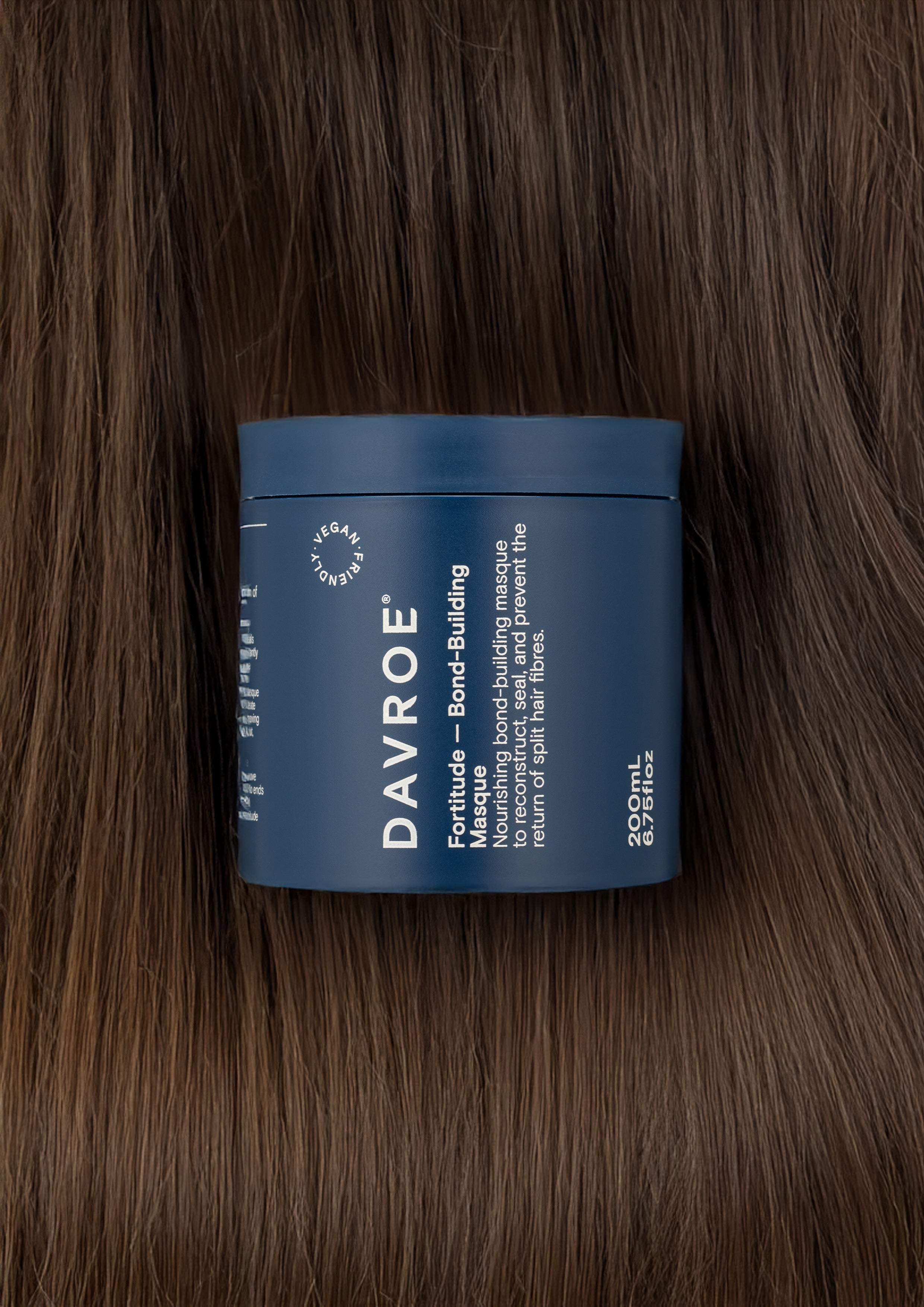


Pack six things and you’ve covered nearly every hair problem a summer trip can throw at you: a mini shampoo and conditioner (or a bar), a multitasking leave-in with UV and heat protection, dry shampoo, a small hair oil, a detangling brush and no-metal ties, plus a microfibre wrap. Check the liquid rules for your flight before you pack, which the section below covers in full.
TL;DR:
- Replace multiple single-use bottles with a compact multitasking leave-in that offers UV, heat, and anti-frizz protection to save space and weight.
- Pack a solid shampoo bar or concentrate to avoid liquid limits and reduce risk of spillage during travel, especially in humid or hard water destinations.
- Keep hairspray and styling products under 100ml in carry-on luggage, and consider solid options like wax sticks to avoid leaks and adhere to airline regulations.
- Use a short daily routine of applying UV protectant, oil on the ends, and rinsing before and after swimming to maintain hair health amid sun, salt, and chlorine exposure.
- Test new products at home before travel and always carry a small backup of your trusted leave-in to prevent styling failures or adverse reactions on holiday.
Table of Contents
- Travel haircare essentials: what actually earns a spot in your bag
- Product formats that survive travel: solids, concentrates and multitaskers
- Can you take hairspray on a plane? Packing rules explained
- Summer and sun-ready routine: protect hair from UV, salt and humidity
- Quick routines by hair type and common travel problems
- Why trust this guide
- Packing a compact salon-grade kit: an editor’s take
- Build your travel kit with Prohair
- Sources
- FAQ
Travel haircare essentials: what actually earns a spot in your bag
Most people overpack haircare because they’re planning for a routine, not a trip. A trip needs less than you think. Editor panels who’ve tested dozens of travel products keep landing on the same conclusion: a handful of multitasking formulas replace what would otherwise be six or seven single-use bottles.
Here’s what belongs in that kit, and why each item earns its place.
- Mini shampoo and conditioner, or a shampoo bar. A 100ml wash duo covers a week away. A bar covers a month and takes up a third of the space. Choose the bar if you’re flying carry-on only; choose the mini bottles if you know exactly what your hair likes and don’t want to test a new format mid-holiday.
- A leave-in that does three jobs at once. Look for one product combining UV filter, heat protection and anti-frizz smoothing. This is the single highest-value item in a travel kit because it replaces a serum, a heat spray and a smoothing cream.
- Dry shampoo, powder or small aerosol. Powder is lighter, doesn’t count against liquid limits and works well between salty, humid days at the beach. A small aerosol can still travel in carry-on under the standard limit, covered in the next section.
- A small hair oil for the ends. A few millilitres go a long way. Oil handles the dry, brittle ends that sun and salt water create faster than anything else in the bag.
- A compact detangler, spray or cream, kept to travel size.
- No-metal hair ties. Metal clasps snag and eventually snap fine strands, which matters more on holiday when you’re pulling hair up and down all day at the pool or the beach.
- A microfibre wrap or towel. It cuts drying time and frizz without a single extra product, which matters when hotel hairdryers are unreliable at best.
For styling, skip anything liquid where you can. A wax or styling stick, a solid styling balm, or a compact pomade covers hold and texture without adding to your liquids count. If you’re set on a hairspray, know that a small aerosol can travel, but a wax stick never needs to be checked, confiscated, or double-bagged.
Pro Tip: Pack your toiletries pouch with solids and tins on the bottom, squeezable tubes upright in a side pocket, and anything that could leak inside a snap-lock bag of its own before it goes into the main pouch. One leaking conditioner bottle can write off a holiday outfit in the time it takes to unzip your suitcase.
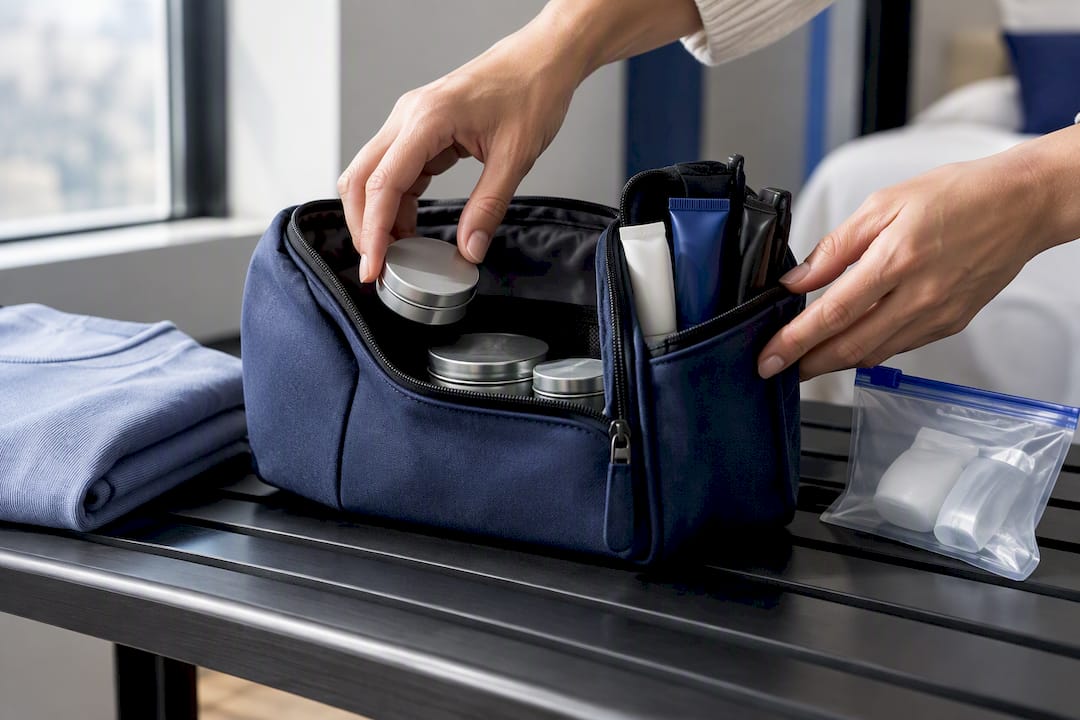
A few extras worth considering if you have room: a small hydrating hair oil for the ends, a compact detangling brush, and a rapid-dry microfibre wrap if you’re short on hotel towel access. None of these are essential, but they cover the gaps a basic kit leaves behind.
Product formats that survive travel: solids, concentrates and multitaskers
Format matters more than brand when you’re travelling. A shampoo bar can sit in a tin at the bottom of a bag for three weeks and come out exactly as it went in. A liquid bottle with a loose cap can ruin everything else in the pouch in one bumpy taxi ride.
Shampoo bars last considerably longer than a bottle of the same size, and they sidestep liquid limits entirely because they’re solid. The tradeoff: hard water in some destinations can leave bars feeling less lathery, so a rinse-out clarifying step helps if your hair feels coated after a wash.
Concentrated leave-ins and oil-serum hybrids are the real space-savers. A 30ml bottle that handles UV protection, frizz control and light conditioning does the job of three separate products, which is exactly the logic editor-tested roundups keep coming back to.
- Powder dry shampoo and solid styling sticks avoid the aerosol question altogether.
- Tins and screw-top jars survive pressure changes better than flip-top lids.
- A protective case around any glass bottle stops breakage in checked luggage.
- Solid and powder formats need their own small pouch or tin, since loose powder shampoo can shift and coat everything nearby if it isn’t sealed properly.
Pro Tip: Test any bar or powder format at home before your trip. Hard water reacts differently with solid shampoo than the soft water most conditioner ads are filmed with, and you don’t want to discover that on day one of a two-week holiday.
Can you take hairspray on a plane? Packing rules explained
Yes, in most cases, but there are limits worth knowing before you get to security. Carry-on liquids, gels and aerosols are typically capped at 100ml (3.4oz) per container, and every container needs to fit into one clear resealable bag.
Aviation guidance treats hairspray as a personal toiletry item, and it’s generally allowed in carry-on if the nozzle is protected from accidental discharge, though exact rules vary by airline, so check before you fly. Checked baggage allows larger aerosol cans, but there are still total quantity limits per passenger, and cans need secure caps to survive the trip in one piece.
- Keep any aerosol under 100ml in your carry-on liquids bag, sealed and easy to pull out at screening.
- Pack larger cans in checked luggage, capped and wrapped, ideally inside a shoe or sock to cushion pressure changes.
- Double-bag any liquid you’re unsure of. A snap-lock bag inside a wash pouch is cheap insurance against a burst seam.
- Tape over pump nozzles on leave-in sprays and detangler bottles, since these are the products most likely to trigger mid-flight and leak.
Short trip, one bag, no checked luggage? Solid and powder formats plus one 100ml leave-in cover almost everything. Longer trip with checked luggage? That’s when a full-size conditioner or a larger dry shampoo can earns its space.
Summer and sun-ready routine: protect hair from UV, salt and humidity
Sun, salt water, chlorine and humidity attack hair from four different angles at once, which is why a single sunscreen-style spray rarely covers the job on its own. A short daily routine handles most of it.
- Morning protection. Apply a leave-in spray or cream with UV filter and humidity resistance before you leave the room. This is the step that actually prevents the damage, rather than fixing it after the fact.
- A drop of oil on the ends. Rub it between your palms first, then work it through from mid-length down. Skip the roots in hot climates, or you’ll be dealing with grease by lunchtime.
- Quick detangle before you go out, not after the beach, when salt has already tightened every knot.
- Before swimming, wet hair with fresh water. Damp hair absorbs less chlorine and salt than dry hair, a small habit that makes a genuine difference over a week at the pool.
- After swimming, rinse and apply a light conditioner or the same leave-in, then wrap hair in a microfibre towel rather than rubbing it dry, which cuts friction damage significantly.
- Touch up flyaways with a wax stick or smoothing balm in humid afternoons, rather than reapplying a full leave-in.
If you’re away longer than a week, a proper treatment mask two or three days in helps offset the cumulative dryness that sun and salt cause. A concentrated moisture treatment packed in a small jar does this without needing a full-size tub. For destinations combining heat with real humidity, a humidity-proofing routine built around smoothing leave-ins works better than fighting frizz with heavier products.
Pro Tip: Keep your emergency oil and wax stick in your daybag, not your suitcase. Humidity peaks in the afternoon, and you won’t be back at the hotel to fix flyaways until evening.
Quick routines by hair type and common travel problems
Hair type changes what’s worth packing more than climate does. Here’s the short version for each.
- Straight hair: Root oil buildup shows fastest, so a light dry shampoo at the roots and a drop of oil at the ends keeps it fresh between washes. Add a texturising spray if you want volume without a full restyle.
- Wavy hair: Refresh with water and a light curl cream rather than reapplying product on top of product, which causes buildup fast in hot weather. A quick scrunch with damp hands revives the wave pattern without a full rewash. A wavy hair routine built for travel keeps this simple.
- Curly hair: Low-friction drying matters more here than anywhere else. A microfibre wrap plus a concentrated leave-in and minimal detangling, done while hair is still wet, prevents most of the frizz curly types battle on holiday. A curly hair routine suited to travel covers the full sequence.
- Colour-treated hair: UV fades colour faster than almost anything else, so a leave-in with UV defence isn’t optional. Stick to sulphate-free cleansers and a colour-protecting leave-in to slow fade.
- Hard water and chlorine: Both leave hair feeling coated or stripped. A clarifying rinse once a week, or a vinegar-water rinse in a pinch, resets things without packing an extra bottle.
Practical guides on packing for travel consistently point back to the same principle: pack for the problems your destination actually creates, not every possible scenario. A beach trip needs detangling and UV defence. A dry mountain trip needs moisture. Few trips need both in full force.
Why trust this guide
Prohair works from the same principle salons use daily: fewer, better products beat a crowded shelf of half-used bottles. That’s the thinking behind high-quality formulas designed to perform reliably, trip after trip, client after client.
The packing advice here draws on aviation security guidance for the liquids and aerosol rules, and on editor-tested product roundups for what actually earns a spot in a travel bag rather than what marketing copy claims will.
- Salon-grade formulas, the same standard used behind the chair, adapted for home and travel use.
- Free shipping on orders over a certain amount, useful if you’re restocking a full travel kit at once.
- A range built across shampoo, conditioner, treatments, styling and accessories, so a compact kit can come from one order rather than five.
Packing a compact salon-grade kit: an editor’s take
The mistake most people make isn’t forgetting something. It’s packing three products that do the same job because none of them felt “complete” on its own. A genuinely good multitasker beats three mediocre single-purpose ones every time, and this is the principle worth building your entire kit around.
My own rule: test any new product at home for a week before it goes in a suitcase, and always pack one tiny emergency decant of your regular leave-in. Holidays are the wrong time to discover a new formula doesn’t suit your hair.
— Burgs
Build your travel kit with Prohair
Prohair is the alternative to guessing your way through a supermarket travel aisle: every product here is a salon-grade formula, sized and chosen the same way a stylist would build a kit for a client heading overseas. You get formulas trusted across 500-plus salon accounts in New Zealand, not a mystery brand picked off a shelf at the airport.
Start with the basics: a travel-ready pairing from shampoo and conditioner, a compact repair option from hair treatments, and a hold product from styling and finishing. If you’re after a ready-made option, the Davroe Blonde Senses travel pack shows how a proper travel kit should be sized and stocked. Orders over $100 ship free, so it’s worth building your full kit in one go rather than piecing it together over several trips. Browse the full range at Prohair and get your kit sorted before your next departure date.
Sources
- The 11 Best Travel Hair Care Products of 2026
- 10 Travel Hair Products for Easier Packing and Styling
- PackSafe - Medicinal & Toiletry Articles | Federal Aviation Administration
- Liquids, Aerosols, and Gels Rule | Transportation Security Administration
FAQ
What are the best hair products to pack for travel?
The most useful items are a mini shampoo and conditioner or bar, a multitasking leave-in with UV and heat protection, dry shampoo, a small hair oil, a detangling brush and a microfibre wrap. Editor-tested travel hair roundups consistently favour multitasking formulas over single-purpose products because they cover more needs with less luggage space.
How do I maintain healthy hair while travelling?
Stick to a short daily routine: a leave-in with UV protection each morning, a drop of oil on the ends, and a rinse with fresh water before and after swimming. Wrapping wet hair in a microfibre towel instead of rubbing it dry also cuts friction damage significantly over a trip.
How should I pack hair products for a flight?
Keep anything liquid, gel or aerosol under 100ml per container in a single clear resealable bag for carry-on. Larger aerosols and bigger bottles can go in checked luggage, capped securely and ideally cushioned inside clothing or a shoe.
What’s the best product to protect hair on holiday?
A leave-in spray or cream combining UV filter, heat protection and anti-frizz control does the most work of any single product on a trip. Pair it with a small hair oil for the ends to cover both sun exposure and the dryness that salt water and chlorine cause.
Can you take hairspray on a plane?
Yes, in most cases a hairspray can travels as a personal toiletry item if the nozzle is protected and it fits within the carry-on liquids limit. Rules vary slightly by airline, so it’s worth checking your carrier’s specific policy before you fly, and packing a wax stick as backup avoids the question entirely.