

Scalp massage measurably increases blood flow to the scalp, lowers stress hormones like cortisol, and has helped grow thicker hair in small clinical trials. It is not a proven cure for genetic hair loss on its own. Thickness gains typically show up after months of consistent effort, and researchers behind one survey suggest a cumulative massage effort before you can fairly judge whether it is working for you. The sections below cover the evidence, the technique, and a routine you can start tonight.
TL;DR:
- Consistent scalp massage over at least 50 hours may lead to visible hair thickness improvements, but results depend on cumulative effort and individual response.
- The most reliable evidence shows that massage increases blood flow and reduces stress hormones, which can support healthy hair growth and improve scalp condition.
- Proper technique involves gentle circular motions with fingertips, working systematically from hairline to the neck, and can be enhanced with tools like scalp brushes or massagers.
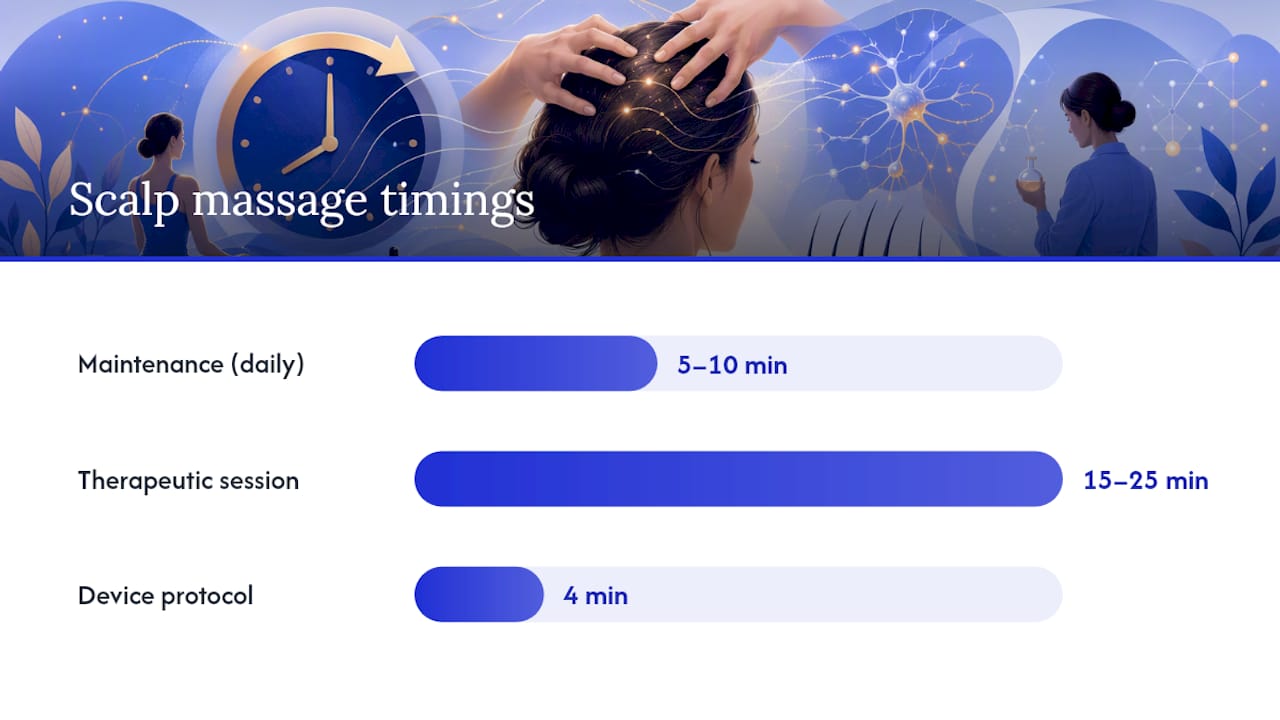
- Short, daily sessions of 5 to 10 minutes support scalp hygiene and relaxation, while longer, therapeutic sessions of 15 to 25 minutes may boost stress relief and hair health.
- Risks are minimal but include hair breakage or irritation from rough technique, undiluted oils, or over-aggressive tools, emphasizing the importance of gentle handling and avoiding massage during active scalp diseases.
Table of Contents
- The real benefits of scalp massage, ranked by evidence
- What the clinical research says and how scalp massage might work
- How to do a scalp massage properly: technique, tools and timing
- A realistic routine and how to track your progress
- Possible downsides and when to stop
- Scalp massage for dandruff, psoriasis and other scalp conditions
- Scalp massage versus other hair and scalp treatments
- Where scalp massage fits into a sensible haircare routine
- Products that support your scalp massage routine
- Sources
- FAQ
The real benefits of scalp massage, ranked by evidence
Some scalp massage benefits rest on solid clinical data. Others are still anecdotal, however plausible they sound. Here is where each one actually sits.
-
Increased scalp blood flow. Massage mechanically stimulates blood vessels near the scalp’s surface, bringing more oxygen and nutrients to hair follicles. This is the most consistently observed effect across studies and the mechanism most researchers point to when explaining downstream benefits. Evidence strength: stronger evidence.
-
Hair thickness gains. A 24-week trial gave nine healthy men a standardised scalp massage protocol using a device for four minutes daily. Average hair thickness increased from 0.085mm to 0.092mm, and the gene-expression changes in dermal papilla cells matched patterns associated with active hair growth. A separate survey of 340 people with androgenetic alopecia found 69% reported visible improvement after twice-daily massage, though the researchers noted most people needed a cumulative massage effort before seeing change. Evidence strength: limited but promising — small sample sizes and self-reported outcomes mean this isn’t settled science yet.
-
Stress relief and lower cortisol. A controlled study on 34 female office workers found that 15 to 25 minute scalp massage sessions, done twice-weekly for 10 weeks, reduced cortisol and norepinephrine and lowered both systolic and diastolic blood pressure. The longer 25-minute sessions produced stronger effects on epinephrine than the shorter ones. Evidence strength: stronger evidence — this is one of the better-designed trials on the topic, with measurable physiological outcomes rather than just self-reports.
-
Better product absorption and scalp hygiene. Massaging a cleanser or treatment into the scalp, rather than just letting it sit, improves contact time between the product and skin. Build-up from styling products and natural oils blocks follicles over time, and massage during cleansing helps loosen that residue before it accumulates. Evidence strength: anecdotal/potential, though it aligns with basic dermatology principles around exfoliation and product penetration.
-
Deeper relaxation and improved sleep. Rhythmic pressure on the scalp triggers a parasympathetic response, the same “rest and digest” state associated with lower heart rate and slower breathing. Many people report feeling drowsy or unusually calm within minutes. Evidence strength: anecdotal/potential, backed loosely by the same stress-hormone data above.
-
Balanced oil production. Regular massage may help distribute natural sebum more evenly across the scalp rather than leaving it concentrated at the roots, which some people find reduces both dryness and excess oiliness over time. Evidence strength: anecdotal/potential.
-
Endorphin release. Touch-based therapies, including massage, are associated with endorphin release, the body’s natural mood elevators. This is well documented in massage therapy broadly but hasn’t been isolated specifically for scalp massage in controlled trials. Evidence strength: anecdotal/potential.
-
Reduced physical tension. People who carry tension in the jaw, temples, or base of the skull often notice scalp massage eases that tightness, likely because the muscles and fascia connecting the scalp to the neck and face respond to the same mechanical pressure. Evidence strength: anecdotal/potential.
What the clinical research says and how scalp massage might work
Three studies carry most of the weight behind scalp massage claims, and each one measured something slightly different.
The 24-week device-based trial tested nine healthy men using a standardised massage protocol for four minutes a day. Beyond the thickness increase, researchers analysed gene expression in dermal papilla cells and found shifts consistent with anagen (active growth phase) signalling. The 340-person survey took a different approach entirely, asking people already practising twice-daily scalp massage to self-report outcomes, with 69% noting improvement. A related analysis of that same survey data found the response was dose-dependent: people who put in more cumulative hours reported more noticeable change, reinforcing the 50-hour benchmark as a rough threshold rather than a guarantee.
The 50-hour benchmark: Researchers behind the androgenetic alopecia survey found perceived improvement tracked closely with total massage time rather than any single long session, which is why they recommend treating a cumulative massage effort as a realistic checkpoint before judging results.
The 34-person stress hormone trial measured something more immediate: physiological markers before and after sessions, rather than long-term outcomes.
How this might actually work biologically:
- Massage applies mechanical stretching force to dermal papilla cells sitting beneath the scalp’s surface, and that stretching appears to trigger changes in gene expression.
- Genes linked to hair growth signalling, including NOGGIN and BMP4, showed increased activity in the device study, while IL6, associated with inflammation, decreased.
- Improved local circulation delivers more oxygen and nutrients to the follicle, which may support the anagen phase.
- None of this happens overnight. The mechanism is plausible and supported by lab-level evidence, but it operates on a timeline of months, not days.
The honest limitations matter here. Sample sizes across these trials are small, ranging from nine to 34 participants for the mechanistic studies, and the larger survey relies on self-report, which invites bias from people who were already motivated enough to commit to a daily routine. There is no large randomised controlled trial yet that isolates scalp massage from every other variable. Temporary telogen shedding, where more hairs than usual fall out shortly after starting a new routine, is also common in the early weeks and typically resolves as the growth cycle resets. What the evidence supports is real: thickness gains are possible, and stress relief is well documented. What remains unproven is that massage alone can reverse established genetic hair loss.
How to do a scalp massage properly: technique, tools and timing
Technique matters more than most people assume, and the wrong pressure can undo any benefit you’re chasing.
- Start at the hairline. Use your fingertips, never your nails, and place them flat against the scalp at the front hairline.
- Apply small circular motions. Move in tight circles with moderate pressure, firm enough to feel the movement in the scalp tissue itself rather than just sliding over hair.
- Work systematically backward. Cover the crown, then move to the sides above the ears, then finish at the base of the skull and neckline.
- Overlap your passes. Each new position should slightly overlap the last so you don’t miss patches of scalp.
- Finish with gentle overall strokes. Light, sweeping motions across the whole scalp signal the session is winding down.
Tool options: Handheld rubber scalp massagers and bristled scalp brushes can help distribute pressure evenly, particularly useful if hand fatigue is an issue or you’re combining massage with shampooing. Standardised devices, like the one used in the 24-week thickness study, apply a consistent four-minute protocol, which removes guesswork around pressure and duration. Be cautious with stiff-bristled brushes or overly aggressive massagers. They can cause micro-tears in fragile or chemically treated hair.
Timing: Five to 10 minutes daily suits general maintenance and relaxation. Therapeutic sessions aimed at stress reduction or hair stimulation run 15 to 25 minutes, matching the protocol from the female office worker trial. The device study used just four minutes daily, proving shorter, consistent sessions can still produce measurable change over 24 weeks.
Pro Tip: Massage during the last few minutes of shampooing, while conditioner or a treatment is still on the scalp. You get the mechanical benefit and better product absorption in the same two minutes, rather than adding an extra step to your routine.
Avoid these common mistakes: digging in with nails instead of fingertip pads, applying undiluted essential oils directly to the scalp (some can irritate sensitive skin), and yanking or pulling at hair that’s already fragile from colour treatment or heat styling.
A realistic routine and how to track your progress
Pick one of two routines depending on your goal, and stick with it long enough to actually judge results.
- Daily maintenance routine (5 to 10 minutes): Fingertip circles across the whole scalp, once a day, ideally during your normal shower or before bed. This suits general relaxation and scalp hygiene.
- Therapeutic routine (15 to 25 minutes, three to seven times weekly): Longer sessions matching the stress-hormone trial’s protocol, aimed at people chasing both relaxation and potential thickness gains.
- Track your minutes, not just your feelings. A simple weekly log of total massage minutes gets you closer to that 50-hour benchmark researchers associate with noticeable change.
- Take monthly progress photos in consistent lighting, at the crown and hairline, since day-to-day changes are invisible but monthly ones often aren’t.
Expect initial relaxation and comfort almost immediately. Some temporary shedding in the first few weeks is normal and not a sign of failure. Measurable thickness or perceived improvement, if it comes, tends to appear between 12 and 24 weeks of consistent effort.
Possible downsides and when to stop
Scalp massage is low-risk for most people, but it isn’t risk-free.
- Hair breakage from rough technique, especially using nails or aggressive brushing on wet, fragile hair.
- Scalp irritation from undiluted essential oils or overly stiff tools, particularly on sensitive skin.
- Temporary telogen shedding, which is normal in the early weeks but can feel alarming if you’re not expecting it.
- Contraindications: avoid massage over active scalp infections, open wounds, recently healed scalp surgery sites, or severe inflammatory scalp disease. A GP or dermatologist should assess these before you resume.
- Red flags requiring medical review: increasing patchy hair loss, scalp pain, bleeding, or any signs of infection. Stop massage immediately and seek clinical guidance rather than pushing through.
Scalp massage for dandruff, psoriasis and other scalp conditions
Massage can help manage some scalp conditions indirectly, mainly by improving circulation and helping cleansing products work more thoroughly, but it isn’t a treatment for the underlying condition itself.
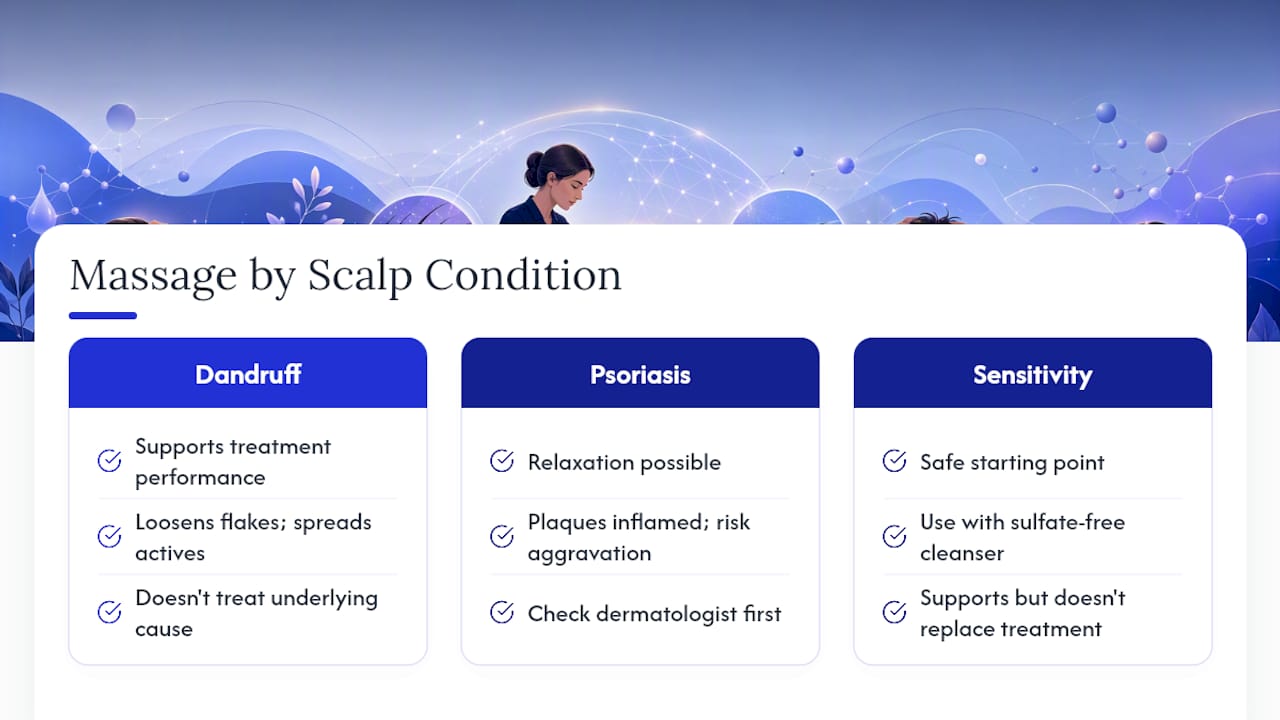
For dandruff, gentle massage during shampooing helps loosen flaking skin and distribute anti-dandruff active ingredients like zinc pyrithione or salicylic acid more evenly across the scalp. It won’t fix the underlying cause, usually a yeast overgrowth or excess oil production, but it can improve how well your existing treatment performs.
For psoriasis, the picture is more cautious. Psoriasis plaques can be inflamed, tender, or prone to cracking, and firm massage risks aggravating the skin rather than soothing it. Very light, gentle pressure may still offer relaxation benefits, but anyone with active psoriasis patches should check with a dermatologist before adding massage to their routine, particularly during a flare.
For general scalp sensitivity or mild irritation, massage combined with a gentle, sulfate-free cleanser tends to be the safest starting point. The rule across all of these conditions is the same: circulation and relaxation benefits are real, but massage supports treatment, it doesn’t replace it.
Scalp massage versus other hair and scalp treatments
Scalp massage sits in a different category to most other hair treatments, because it’s free, has almost no side-effect profile, and works through mechanical stimulation rather than active ingredients.
Topical treatments like minoxidil work pharmacologically, extending the growth phase of hair follicles through a different mechanism entirely. The evidence base for minoxidil is considerably larger and more consistent than anything available for scalp massage alone, which makes it the better-established option for people with diagnosed androgenetic alopecia. Combining the two isn’t contradictory. Massage may improve how well topical products spread and absorb, discussed earlier in the product absorption section.
Professional treatments, including PRP injections or low-level laser therapy, involve clinical oversight, higher cost, and generally larger evidence bases for specific hair-loss diagnoses. These aren’t interchangeable with a self-administered massage routine, but they’re not mutually exclusive either.
Supplements and specific oils occupy similarly uncertain ground to scalp massage itself. Some animal studies suggest ingredients like peppermint or lavender oil affect hair growth signals, but this evidence is preliminary and hasn’t been confirmed in large human trials.
The honest comparison: scalp massage is the lowest-risk, lowest-cost option on this list, with genuine but modest evidence behind it. It works best as a companion to other treatments, not a replacement for medically supervised options when hair loss is significant or progressive.
Where scalp massage fits into a sensible haircare routine
Scalp massage is a low-risk habit that supports comfort, circulation, and possibly thickness for some people. It is not a substitute for medically supervised treatment when hair loss is significant or progressive. Pairing massage with topical treatments like minoxidil, rather than instead of them, tends to be the more sensible approach, since massage may improve product spread without interfering with how the active ingredient works. Anyone noticing accelerating or patchy thinning should talk to a GP or dermatologist rather than relying on massage alone.
— Burgs
Products that support your scalp massage routine
Massage works better when your scalp is actually clean and clear of build-up first, which is where the right products earn their place in your routine. Specialist retailers stock salon-grade formulas trusted by salons throughout New Zealand, so you’re not guessing which cleanser or treatment suits a sensitive or oily scalp.
If build-up is your issue, work an exfoliating scrub through damp hair before massaging to lift residue away from the follicle. For sensitive or easily irritated scalps, a micellar cleansing oil cleanses gently while you massage, without stripping natural oils. Once you’re done, massaging an overnight serum into damp scalp helps the formula sit closer to the skin overnight, right when your scalp is most receptive to it. Prefer a complete set? The Scalp Remedy trio pack covers cleansing, treatment and hydration in one order, with the full range browsable on the Prohair treatments collection. Orders over a certain threshold ship free, so it’s worth building your full scalp routine in one go.
Sources
- Standardized scalp massage results in increased hair thickness by inducing stretching forces to dermal papilla cells in the subcutaneous tissue
- Survey-based study of standardized scalp massage in people with androgenetic alopecia
FAQ
Is it good to massage your scalp every day?
Yes, for most people, daily scalp massage of five to 10 minutes is safe and supports relaxation, circulation, and scalp comfort. Those chasing hair thickness gains may need consistent effort over months, since survey data points to roughly 50 cumulative hours before benefits become noticeable.
What hormone is released during a scalp massage?
Scalp massage is linked to reduced cortisol and norepinephrine, the body’s primary stress hormones, based on a controlled trial on female office workers. It’s also associated with endorphin release, the body’s natural mood-lifting chemicals, though this hasn’t been isolated specifically for scalp massage in a dedicated trial.
What are the potential downsides of getting a scalp massage?
The main risks are hair breakage from rough technique, scalp irritation from harsh tools or undiluted oils, and temporary shedding in the first few weeks of a new routine. People with active scalp infections, open wounds, or recent scalp surgery should avoid massage until a GP or dermatologist clears them.
Is head massage good for the brain?
Head massage promotes relaxation and a parasympathetic “rest and digest” response, which can ease tension and support better sleep. There isn’t strong clinical evidence that it directly improves cognitive function, but the stress-reduction effects documented in trials are well established.
Does scalp massage actually regrow hair?
Small trials show scalp massage can increase hair thickness, with one 24-week study recording measurable gains in nine participants, but it isn’t a proven cure for genetic hair loss on its own. It works best alongside evidence-based treatments and gentle scalp-care products, not as a standalone replacement for them.