
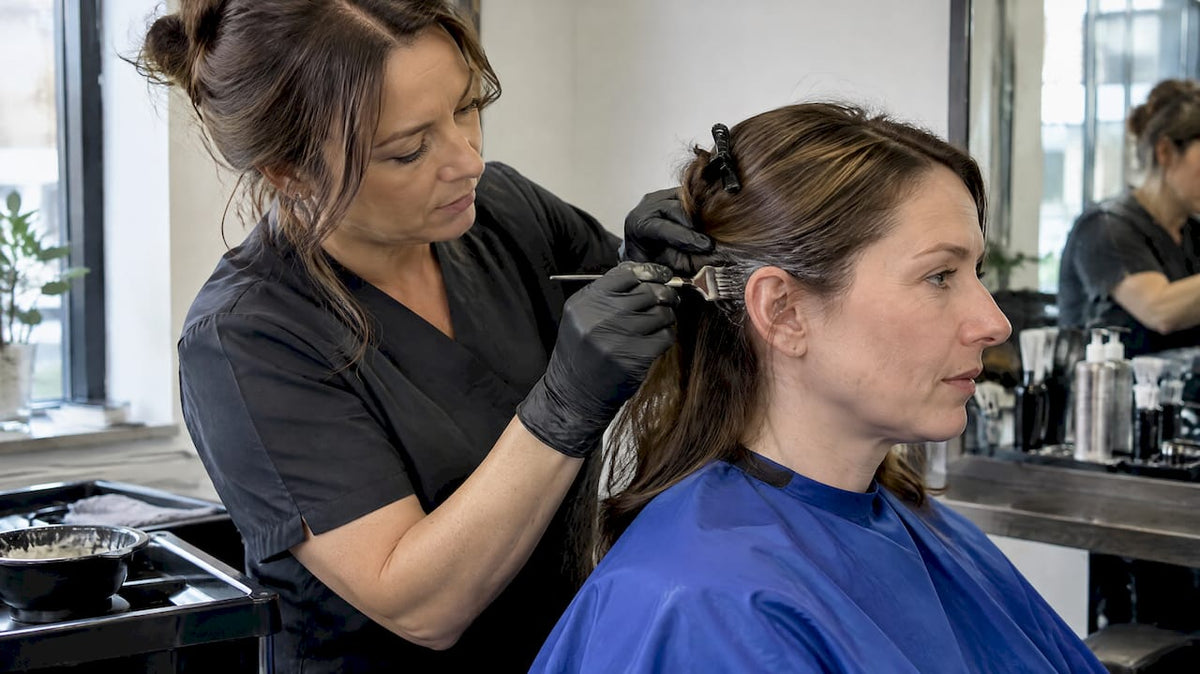
If your scalp is itchy after colouring, it’s most likely sensory irritation from the dye itself rather than a true allergy, though a spreading rash, swelling or blisters points to an allergic reaction. Either way, stop using the product and rinse your scalp thoroughly with lukewarm water right away. If symptoms are severe or you notice facial swelling or difficulty breathing, seek emergency care immediately.
TL;DR:
- Most post-dye scalp itch results from sensory irritation caused by alkaline agents and peroxide, especially on already damaged or dry skin.
- Allergic reactions to ingredients like PPD may cause delayed, more severe symptoms such as swelling, blisters, and spreading redness, sometimes requiring emergency care.
- Rinsing thoroughly, applying cool compresses, and avoiding hot styling tools can typically calm irritation, but persistent or severe symptoms may need medical assessment.
- Using gentle, sulphate-free shampoos and reducing water and hot water exposure helps protect a sensitive scalp between colourings.
- Precautions such as patch testing, asking salons about lower-PPD options, and keeping a product journal can significantly lower allergy risk.
Table of Contents
- Why colouring can make your scalp itch
- What to do right now to calm an itchy scalp
- Gentle daily care for a sensitive, colour-treated scalp
- When the itch is an allergy: signs, first aid and medical care
- Reducing your risk before your next colour
- A salon-trained take on preventing scalp reactions
- Soothing and protecting your scalp after colouring
- FAQ
- Sources
Why colouring can make your scalp itch
Most post-colour itch comes from sensory irritation. The alkaline agents and hydrogen peroxide in permanent hair dye disrupt the scalp’s surface, and this effect is stronger on a scalp that’s already dry or damaged, since a higher rate of water loss through the skin and lower natural oil levels make it more reactive to dye-base ingredients. This kind of irritation tends to settle once the product is off and the scalp is calm again.
Allergic contact dermatitis is a different problem. It’s commonly triggered by paraphenylenediamine, or PPD, an ingredient in most permanent dyes and one of the leading cosmetic allergens. Unlike irritation, an allergic reaction can be delayed, sometimes appearing hours after colouring and often peaking around 48 hours later. It can show up as:
- Intense itching with redness that spreads beyond the hairline
- Swelling of the scalp, forehead, ears or eyelids
- Weeping or crusted patches, sometimes with blistering
- Itching that worsens rather than improves over the following day
A fully oxidised PPD molecule is far less likely to trigger a reaction than the partially oxidised residue left behind if dye isn’t rinsed out properly, which is one reason thorough rinsing matters so much straight after application.
Other culprits are worth ruling out too. Sulphate-heavy shampoos, fragranced conditioners, bleach damage from lightening before colouring, and underlying conditions like seborrhoeic dermatitis or psoriasis can all cause or worsen itching, and dermatology sources note that contact dermatitis is common among people who regularly colour their hair.
What to do right now to calm an itchy scalp
If you’re still mid-colour or just finished, act fast:
- Stop applying product immediately and rinse thoroughly with lukewarm water, not hot.
- Wash out residual dye using a gentle soap substitute or a mild, fragrance-free shampoo rather than scrubbing.
- Apply a cool compress to the scalp for 10 to 15 minutes to reduce heat and itch.
- Avoid hot tools, tight ponytails or any styling that adds friction while the scalp is sensitive.
- Resist the urge to scratch or scrub, since broken skin increases the risk of infection and further irritation.
A short course of an oral antihistamine can take the edge off itching for mild cases, and a low-strength hydrocortisone cream applied sparingly may help settle redness. Avoid these if you have broken or weeping skin, are pregnant, or you suspect a genuine allergic reaction rather than simple irritation, in which case medical advice is the safer path.
One step to avoid: don’t reach for strong home oxidisers like concentrated hydrogen peroxide to try to “neutralise” dye yourself. Clinical guidance notes these measures can cause further irritation and aren’t well tolerated by everyone, so they’re best left to a clinician’s judgement.
Pro Tip: Keep a small jar of plain, unscented petroleum jelly on hand before your next colour appointment. Dabbed along the hairline beforehand, it acts as a simple barrier that limits dye contact with the skin.

Gentle daily care for a sensitive, colour-treated scalp
Once the initial itch has settled, your daily routine matters just as much as the first-aid steps. A few adjustments make a real difference:
- Switch to sulphate-free, low-alkali shampoo and conditioner that’s gentler on a reactive scalp.
- Use a lightweight emollient or a specialised scalp treatment to restore moisture without clogging pores.
- Save facial or body oils for intact skin only, and skip them if the scalp is broken or weeping.
- Try a mild scalp scrub no more than once a week once healing is underway, never on inflamed or broken skin.
- Wash less often, use lukewarm rather than hot water, and let hair air-dry when you can to reduce water loss through the scalp’s surface.
These small changes protect both your colour and your skin barrier at the same time.
When the itch is an allergy: signs, first aid and medical care
A few warning signs separate allergy from ordinary irritation, and they’re worth taking seriously:
- A rash that spreads well beyond where the dye touched
- Blistering, oozing or crusting skin
- Swelling of the eyelids, lips or face
- Any difficulty breathing or swallowing, which needs emergency care straight away
If you spot these, wash the area thoroughly with a soap substitute, apply cool compresses, and stop using the product immediately. Clinical management for acute dye-related dermatitis typically includes thorough washing, topical corticosteroids and, in more severe cases, a short course of oral steroids or antibiotics if infection sets in. A dermatologist may also refer you for proper patch testing, which is more controlled than anything you can do at home, since skin test laser treatment can provide thorough pre-treatment assessments and identify sensitivities under medical supervision.
Reducing your risk before your next colour
A few precautions lower your odds of a repeat reaction:
- Patch test on skin, not just a quick scalp dab, and know that the standard 48-hour window can still miss a delayed reaction, so watch for symptoms over several days.
- Check ingredient labels for PPD and related compounds, and ask your colourist about lower-PPD or vegetable and henna-based alternatives, noting these still carry their own allergy risks.
- Ask your salon to use sectioning and a protective barrier along the hairline to limit direct scalp contact.
- Keep a simple journal noting the product used, when symptoms started and how they progressed, which is genuinely useful if you ever need a dermatologist’s input.
For a deeper look at why damaged hair reacts differently to product, our piece on testing your hair’s porosity at home is a useful next read.
A salon-trained take on preventing scalp reactions
Years spent behind the chair teach you that most itchy-scalp complaints come down to contact time and product choice, not bad luck. Sectioning carefully, keeping dye off the skin and rinsing properly cut irritation more than any aftercare product ever will. Where aftercare does earn its place is in daily maintenance between appointments: professional-grade, scalp-considerate shampoos and treatments, the kind used in salons rather than pulled off a supermarket shelf, tend to be formulated with a gentler pH and fewer harsh surfactants, which matters when your scalp is still settling after colour.
— Burgs
Soothing and protecting your scalp after colouring
If your scalp still feels tight or itchy days after colouring, your routine is often the easiest thing to fix. We stock gentle, scalp-focused options built for exactly this: the Shampoo + Conditioner range for everyday gentle cleansing, and our Professional Hair Treatments for Repair & Hydration for deeper, scalp-friendly moisture between colour sessions.
Browse the full range at ProHair and find a routine that keeps your scalp calm and your colour looking its best.
This article is general information, not a substitute for advice from a qualified doctor. Consult a qualified healthcare professional about your own circumstances before acting on anything here.

FAQ
What can I do to relieve an itchy scalp after dyeing my hair?
Rinse thoroughly with lukewarm water, wash with a gentle soap substitute, and apply a cool compress to calm the skin. A short course of oral antihistamines or a low-strength hydrocortisone cream can help mild cases, but avoid home oxidisers and seek medical advice if symptoms worsen.
How long does an itchy scalp last after hair dye?
Simple irritation usually settles within a day or two once the product is off and the scalp is cared for gently. An allergic reaction can take longer and often peaks around 48 hours after exposure, sometimes with delayed onset.
Does colouring your hair make your scalp itch?
Yes, colouring commonly causes itching, either from sensory irritation caused by the dye’s alkaline agents and peroxide, or from an allergic reaction to an ingredient like PPD. Contact dermatitis is common among people who colour their hair regularly.
How to treat damaged scalp from hair dye?
Switch to sulphate-free, low-alkali shampoo and conditioner, use a lightweight scalp treatment to restore moisture, and avoid hot water or tight styling while healing. If the skin is broken or symptoms persist, a clinician may recommend topical corticosteroids rather than home remedies.
Sources
- DermNet NZ — Allergy to paraphenylenediamine
- Para-phenylenediamine allergy: current perspectives on diagnosis and management — PMC
- Cleveland Clinic — Itchy scalp: common problems and fixes