
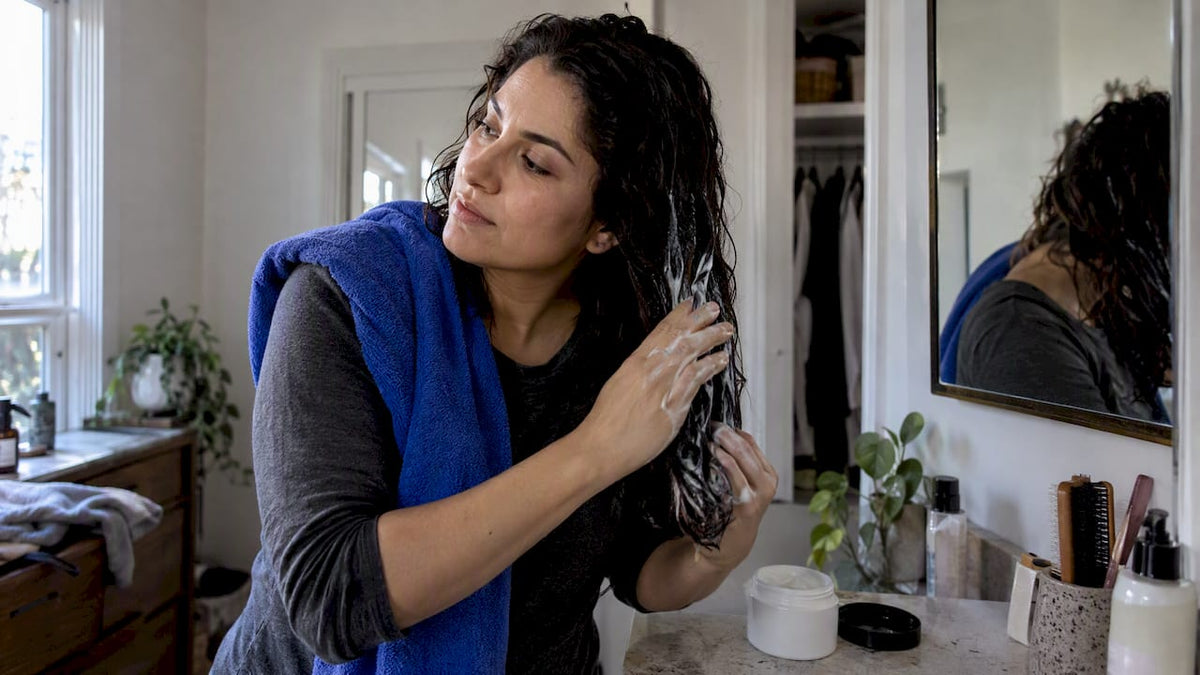
A good deep conditioning routine is simple: shampoo, apply the treatment to damp hair from the mid-lengths to the ends, leave it for the time on the label (usually 15 to 30 minutes), then rinse with cool water. Most people do it once a week. Dry, curly or damaged hair may want it twice, and fine hair is often happier with every second week.
The detail is in the choices around those steps: which product, how often, how much heat, and when to stop. This guide walks you through each one, so the routine fits your hair and your week, not the other way round.
TL;DR
- Deep condition about once a week. Go to twice a week for tight curls or very dry, damaged hair, and every two weeks for fine or thin hair.
- Shampoo first, then apply to damp hair, concentrating on the mid-lengths and ends rather than the scalp.
- Leave it on for the time stated on the label, commonly 15 to 30 minutes. Longer does not mean better.
- A plastic cap or shower cap is all the warmth most treatments need. Check the label before adding heat.
- Rinse with cool water to help seal the cuticle, and adjust the frequency if hair starts to feel heavy or limp.
Table of Contents
- What deep conditioning actually does
- How often should you deep condition?
- Step by step: how to deep condition at home
- How long should you leave it on?
- Choosing a deep conditioner for your hair
- Making it stick: a weekly rhythm
- Perspective: what we see after years of working with salons
- Common mistakes to avoid
- Deep conditioning for kids and sensitive skin
- Build your routine with ProHair
- FAQ
- Sources
What deep conditioning actually does
A daily conditioner sits on your hair for a couple of minutes and smooths the surface. A deep conditioner is a different tool. Healthline’s guide explains that deep conditioners carry higher concentrations of emollient and humectant ingredients than everyday conditioners, and are left in for 20 to 30 minutes instead of two or three. Byrdie makes the same distinction: they are heavier, made for occasional use, and designed to sit on the hair longer.
Think of it as a weekly reset. Sun, wind, heat tools, colour and even hard brushing wear the outer layer of the hair down over time. A treatment gives that layer something back, so hair feels softer, detangles more easily and breaks less.
It will not repair split ends. Once a hair has split, only a trim fixes it. What deep conditioning does is slow the damage that leads there.

How often should you deep condition?
There is no single number, and anyone who gives you one for every head of hair is guessing. Healthline notes that the range runs from once a month to twice a week, depending on hair texture, how much heat you use and how damaged the hair is. A sensible starting point sits in the middle.
| Your hair | Starting frequency | Watch for |
|---|---|---|
| Most hair types | Once a week | Hair that feels coated or flat: ease back |
| Tight curls, very dry or heavily damaged hair | Up to twice a week | Hair that stays soft but loses bounce or feels stretchy |
| Fine or thin hair | Every two weeks | Limpness or greasy roots soon after washing |
| Colour-treated hair | Once a week | Dullness, rough ends, fading |
| Healthy, low-maintenance hair | Every two to four weeks | Dryness creeping back at the ends |
These ranges come from the guidance in Healthline’s deep conditioning guide, which says fine hair should be treated with caution so it isn’t weighed down. Treat the table as a starting point and then let your hair tell you. If it feels soft and bouncy for the whole week, you have it right. If it feels heavy by day two, space the treatments out.
Routines work the same way in other parts of your life. If you like reading about how climate changes what a body needs, this dry-climate nail care routine makes the same point about consistency over intensity: small, regular care beats a rare big effort.
Protein, moisture or both?
Some routines suggest choosing between a protein treatment, a moisture treatment or a balance of both on each wash day. It is a useful frame. Hair that feels mushy, overly stretchy or limp when wet usually wants strengthening. Hair that feels rough, brittle or straw-like usually wants moisture.

There is evidence that targeted ingredients help damaged hair. A study in the Journal of the American Academy of Dermatology looked at a shampoo and conditioner line containing native wheat protein and wheat germ oil for dry, damaged hair, and found it was substantive to the hair. That study tested a specific product line, so read it as a sign that protein-based care can help, not a promise about every protein product.
The risk is going too far. Byrdie warns that over-proteinisation can leave hair feeling heavy, greasy or brittle rather than soft and resilient. If you use a protein-rich treatment, alternate it with a moisture-focused one.
Step by step: how to deep condition at home
The whole routine takes about 30 minutes, and most of that is waiting. You can do other things while the treatment works.
- Shampoo first. Wash with your usual shampoo and rinse with lukewarm water. Healthline explains that clean hair lets the conditioning agents attach better to the freshly washed hair surface.
- Squeeze out the excess water. Hair should be damp, not dripping. A gentle squeeze with your hands or a soft towel is enough.
- Detangle gently. Hair is more vulnerable when wet, so use your fingers or a wide-tooth comb. Start at the ends and work up to the roots.
- Apply the treatment. Work it through the mid-lengths and ends, where hair is oldest and driest. Keep most of it off the scalp unless the label says otherwise, particularly if your roots get oily. Vogue’s advice from hairdresser Bataille is to concentrate on the mid-lengths and ends of damp hair.
- Spread it evenly. Use a wide-tooth comb or your fingers to coat every strand.
- Cover your hair. Clip it up and pop on a shower cap or plastic cap. It keeps the product from drying out and traps your natural warmth.
- Wait. Follow the label. Fifteen to thirty minutes is typical.
- Rinse with cool water. This helps seal the cuticle and lock in moisture. Rinse until the water runs clear and the hair no longer feels slippery.
- Dry gently. Pat or squeeze with a soft towel, then style as usual. If you use heat tools, apply a heat protectant first.
Wet or dry hair?
Most routines use damp hair, straight after shampooing. Damp hair accepts product evenly and it fits into a normal wash day. Dry-hair application (sometimes called a pre-shampoo treatment) suits very thick or coarse hair, but it is a variation. If you try it, follow the label for that product.
Do you need heat?
Not necessarily. Curl Centric’s guide says the cap provides all the heat you need. Byrdie’s stylist sources add that heat can help absorption, but too much can backfire, so read the label to see whether warmth is recommended. If it does not mention heat, a cap is the safe choice.
How long should you leave it on?
For most treatments, 15 to 30 minutes is the sweet spot. Some quick formulas work in 5 to 10 minutes, and Healthline reports typical processing times ranging from 3 to 30 minutes. Vogue suggests 10 to 30 minutes depending on what your hair needs, though it also points out that every formula differs.
The label wins. Leaving a product on past the recommended time typically gives no extra benefit, and Byrdie notes it can lead to over-conditioning. The same goes for sleeping in a treatment that was not designed for it: unless the product says it is an overnight mask, it is not meant to stay on overnight.
Choosing a deep conditioner for your hair
Start with what bothers you most, then match the formula.
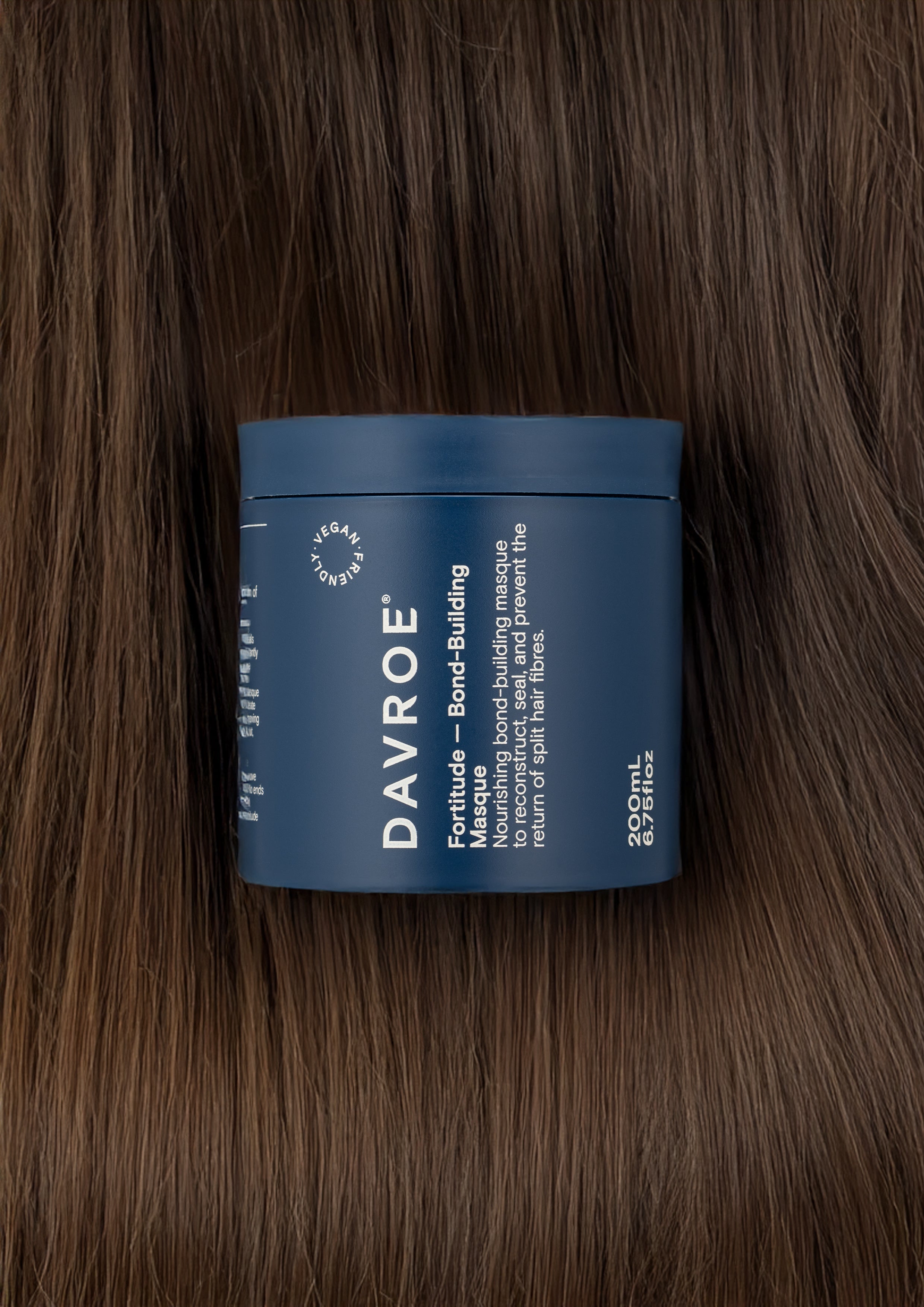
- Dry, rough hair: look for a rich moisture mask or treatment. Our professional treatments collection is built around repair and hydration.
- Damaged or heat-styled hair: choose a repair-focused formula and use a heat protectant before every blow-dry or straightening session.
- Curly hair: curls tend to be drier because natural oils travel slowly down a bend. Our guides to a complete curly hair routine and to defining curls at home show where a deep conditioning day sits in the week. The Davroe CURLiCUE Deep Conditioning Rinse is one to look at if you want a formula made with curls in mind.
- Fine hair: pick a lighter treatment, apply only to the ends and space out sessions. Our guide to fine hair breakage explains why friction matters as much as product.
- Thick, frizzy hair: moisture plus a sensible styling routine. See our 3 step routine for thick, frizzy hair.
- Colour-treated hair: hydration helps colour look glossier, and gentle habits help it last. Our colour fade guide covers the salon routine we recommend.
It also pays to learn to read the label. Our piece on reading shampoo labels applies equally well to treatments: the first few ingredients tell you far more than the front of the bottle does.
Natural and eco-conscious options
Many people want gentler formulas with fewer questionable ingredients. That is a reasonable thing to ask for, and the science is moving. Researchers have shown that a fully bio-based conditioner using lignin gel emulsions with natural oils such as coconut oil performed comparably to commercial conditioners, reducing wet combing force by roughly 13%. That is laboratory research, not a shop-shelf product, but it shows natural does not have to mean weaker.
If you are comparing formulas, our guide on microplastics in haircare shows what to look for beyond the word “polymer”.
A note on kitchen-cupboard treatments
Home mixes of oils, avocado or yoghurt are popular, but results vary, and there is no label telling you how long to leave them or how they behave on colour-treated hair. A formulated treatment is tested and consistent, which matters if you want predictable results.
Making it stick: a weekly rhythm
The best routine is the one you actually do. Here is a pattern that suits a busy week.
- Pick one wash day. Sunday evening works for many people, because the treatment time doubles as a reset before the week.
- Stack it with something you already do. Apply the treatment, put on a cap, then answer emails, fold washing or read.
- Keep the products together. Shampoo, treatment, wide-tooth comb and cap in one spot means you don’t have to hunt for anything.
- Review monthly. After four weeks, ask whether hair feels softer, tangles less and holds style longer. If it feels weighed down, stretch the gap. If it still feels dry, add a second session.
In winter, heated indoor air and cold wind pull moisture from the hair, so it is worth leaning on your treatment more. Our winter hair care guide sets out three weekly steps for exactly that.
Perspective: what we see after years of working with salons
We supply more than 500 salon accounts across New Zealand, so we hear the same hair stories again and again. The most common one is not about a missing miracle product. It is about a routine that is too complicated to keep up.
Our view is simple. Pick one good treatment, use it on a regular day, and keep everything else in the routine easy. A treatment used weekly for two months will do more than an expensive one used three times and forgotten.
We also think label-reading beats hype. The right frequency, the right contact time and the right amount of product are all printed on the bottle, and they come from the people who formulated it. When a salon professional tells you to follow the label, they mean it.
Lastly, hair is personal. Two people with the same hair type can need different routines because one swims, one colours, one straightens every morning. Start with the guidance here, then let your own hair set the pace.
— Burgs
Common mistakes to avoid
- Skipping the shampoo. Product on top of dirt and old styling residue can’t do its job.
- Applying to the scalp. Unless the label says otherwise, keep treatments to the lengths and ends. Oily roots plus heavy product equals limp hair.
- Too much, too often. Over-conditioning leaves hair heavy or greasy. Cut back if you notice this.
- Leaving it on for hours. Longer is not better. Stick to the label.
- Using hot water to rinse. Cool water is the better finish for the cuticle.
- Rough detangling. Wet hair is fragile. Go slowly from the ends up. Persistent snapping is worth looking into: our guide to the causes of hair breakage is a good place to start.
Deep conditioning for kids and sensitive skin
If you are treating a child’s hair, choose a reputable product, follow the label and keep it well out of reach afterwards. Even natural or organic hair products can be hazardous if swallowed. In New Zealand, cosmetics are covered by the EPA’s cosmetics rules, and a compliant product should show a batch code and contact details for the New Zealand supplier or manufacturer.
Stop using a product immediately if there is any allergic reaction. If the reaction is severe, seek medical advice, or phone Healthline on 0800 611 116, as set out on the Health NZ page on poisons around the home. If you have a sensitive scalp or a history of reactions, check the ingredient list and talk to your pharmacist, GP or hairdresser before trying something new.
Build your routine with ProHair
We stock salon-grade shampoo and conditioner, professional treatments for repair and hydration and leave-in care, all shipped from our New Zealand warehouse. Shipping is free on orders over $100, so a shampoo, treatment and heat protectant can go in one order. If you’re not sure where to start, browse the full haircare range and match a treatment to the hair type notes above.
FAQ
Is it better to deep condition wet or dry hair?
For most people, damp hair straight after shampooing is the best option. It takes the product evenly and fits into a normal wash day. Some people with very thick or coarse hair apply to dry hair before washing, but follow the label for that product.
How many times a week should I deep condition?
Once a week suits most hair types. Tight curls or very dry, damaged hair may benefit from twice a week, while fine hair may only need it every two weeks. If your hair feels heavy or limp, cut back.
How many minutes should I leave a deep conditioner in?
Fifteen to thirty minutes is typical, but some formulas are designed for 5 to 10 minutes. Follow the label, because leaving it longer usually adds no benefit and can leave hair feeling heavy.
Can I deep condition naturally at home?
You can, but home mixes are less predictable than a formulated treatment, and there is no label to guide timing. If you want a natural-leaning option, look for a formulated product with a clear ingredient list and follow the instructions on the pack.
Sources
- Healthline: How to deep condition hair
- Byrdie: How to deep condition your hair like a total pro
- Vogue: The best deep conditioners
- Curl Centric: How to deep condition your hair at home
- Journal of the American Academy of Dermatology: wheat protein and wheat germ oil study
- PMC: Lignin gel emulsions for environmentally benign hair conditioning
- EPA New Zealand: Cosmetics fact sheet
- Health NZ: Poisons around the home