

Fine hair breaks more easily than medium or thick hair, but most breakage improves within weeks once you cut the tension and friction causing it. Broken strands won’t reattach, but healthy follicles keep producing new growth, so the goal is retention, not repair of what’s already snapped.
TL;DR:
- Most fine hair breakage results from mechanical tension, friction, heat, and chemical damage rather than scalp issues or shedding conditions.
- Breakage commonly appears as blunt ends or break points at the ponytail elastic, with root bulbs indicating shedding rather than damage.
- Lightweight routines involving gentle washing, proper conditioning, low heat, and soft styling tools can significantly reduce breakage risks.
- Over-conditioning and heavy protein treatments often cause more damage unless carefully dosed according to hair feel and condition.
- Regular trims, avoiding tight styles, and using gentle, low-chemical products are essential for maintaining healthy, unbroken fine hair.
Table of Contents
- Is it breakage, shedding, or new growth?
- Why fine hair breaks: anatomy and everyday habits
- Build a routine that stops the breakage cycle
- Protein vs moisture: repairing without weighing hair down
- What a lightweight fine-hair routine looks like in practice
- What actually matters, and what doesn’t
- How Prohair fits into a fine-hair routine
- Sources
- FAQ
Is it breakage, shedding, or new growth?
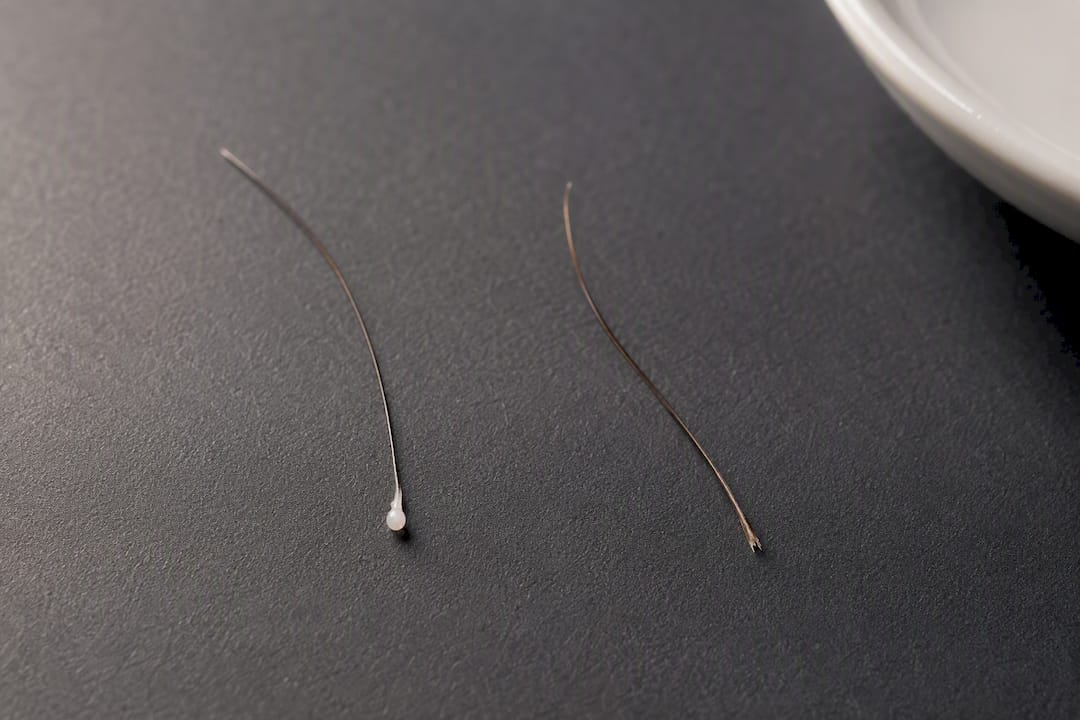
The bulb test settles most confusion. Pull a stray hair from your brush or pillow: a shed hair has a small white or translucent bulb at the root, while a broken hair ends in a blunt, frayed tip with no bulb at all.
Where the damage sits on your head often points to the cause. A clean break across the crown or a band of shorter, frizzed strands where a ponytail sits usually means mechanical stress, not a scalp problem.
Run this simple check for a week:
- Collect a day’s worth of hair from your brush, shower drain and pillow.
- Sort it by length. Lots of short, blunt pieces of similar length signals breakage.
- Note whether pieces have a root bulb. Bulbs at the end mean normal shedding, which most people lose at some volume daily without it being a concern.
- Check ponytail circumference or part width monthly rather than counting stray hairs, since tracking measurable changes over time beats guessing from a handful of strands.
See a GP or dermatologist if you notice a sudden, large increase in long hairs with visible bulbs, or a rapid change in overall density. That pattern points to a shedding condition rather than breakage, and it deserves a proper diagnosis rather than a new shampoo.
Why fine hair breaks: anatomy and everyday habits
Fine hair has a smaller diameter, which means less cortex (the strand’s structural core) and fewer protective cuticle layers than medium or coarse hair. Under load, hair snaps at its thinnest point first: laboratory research measuring fracture location found this “weakest link” pattern holds up strongly, with a correlation of roughly 0.86 between fracture point and minimum strand diameter. Fine strands simply reach that failure point under less force.
Fine hair reaches breaking point faster than thicker hair under identical stress, because there’s less structural material to absorb the load before the strand gives way.
Everyday habits do the rest of the damage:
- Mechanical tension: tight elastics, hair ties left in overnight, and brushing wet hair from the roots down.
- Friction: rough towel-drying, cotton pillowcases, and collars or bag straps rubbing the same spot daily.
- Heat and chemicals: fine strands absorb heat and chemical treatments faster, and cumulative thermal and chemical processing measurably reduces tensile strength over repeated exposure.
- Product buildup: heavy oils, silicones and over-conditioning coat fine strands, adding weight and friction rather than protection.
A quick diagnostic clue: a visible band of breakage exactly where a ponytail sits is almost always elastic damage. Frayed, uneven ends across the whole head usually point to heat or chemical wear. Frizz concentrated at the temples or nape often traces back to pillowcase or collar friction.
Build a routine that stops the breakage cycle
Prevention comes down to reducing tension and weight at every step, not adding more products; for detailed guidance on caring for delicate strands, see our practical guide to pielęgnacja natural hair.
- Wash on a rhythm that suits fine hair. Every second day works for most people; oilier scalps may need daily washing with a lightweight, gentle surfactant. Clarify every two to three weeks to clear buildup that makes fine hair sit flat and increases friction.
- Place conditioner correctly. Apply a nickel-sized amount to mid-lengths and ends only, never the roots, where it weighs hair down without adding benefit.
- Detangle from the ends up. Hold the section near the root to protect it, and work through knots with a wide-tooth comb or soft-bristle brush before you touch a hairbrush to wet hair.
- Follow the 75% rule. Air-dry to roughly three-quarters dry before reaching for heat, and keep tools on low or medium with a heat protectant applied every single time.
- Swap tight styles for soft ones. Fabric scrunchies and loose spiral ties beat tight elastics; silk or satin pillowcases cut overnight friction.
- Regular trims are recommended frequently to manage split ends and breakage, tailored to individual hair needs. Regular trims remove split ends before they travel up the shaft and cause more breakage. This protects length in the long run.
Heat applied to soaking wet hair does the most damage, and it’s the easiest fix to build into an existing routine.*
Protein vs moisture: repairing without weighing hair down
Fine hair needs a lighter touch with protein than medium or thick hair, because there’s less structural room to absorb it before strands turn stiff. A simple stretch test helps: wet hair that stretches too far and snaps usually needs protein; hair that feels stiff or brittle from the start usually needs moisture instead.
Start light. A hydrolysed protein treatment applied weekly or less is enough for most fine hair; daily or heavy protein use is where things go wrong.
- Signs of protein overload: straw-like texture, unusual stiffness, or hair that snaps rather than stretches when wet. Back off and add a moisture-rich rinse-out conditioner for a week or two.
- Best formats for fine hair: light leave-in sprays, small-dose bond builders used sparingly, and rinse-out conditioners applied to mid-lengths and ends only.
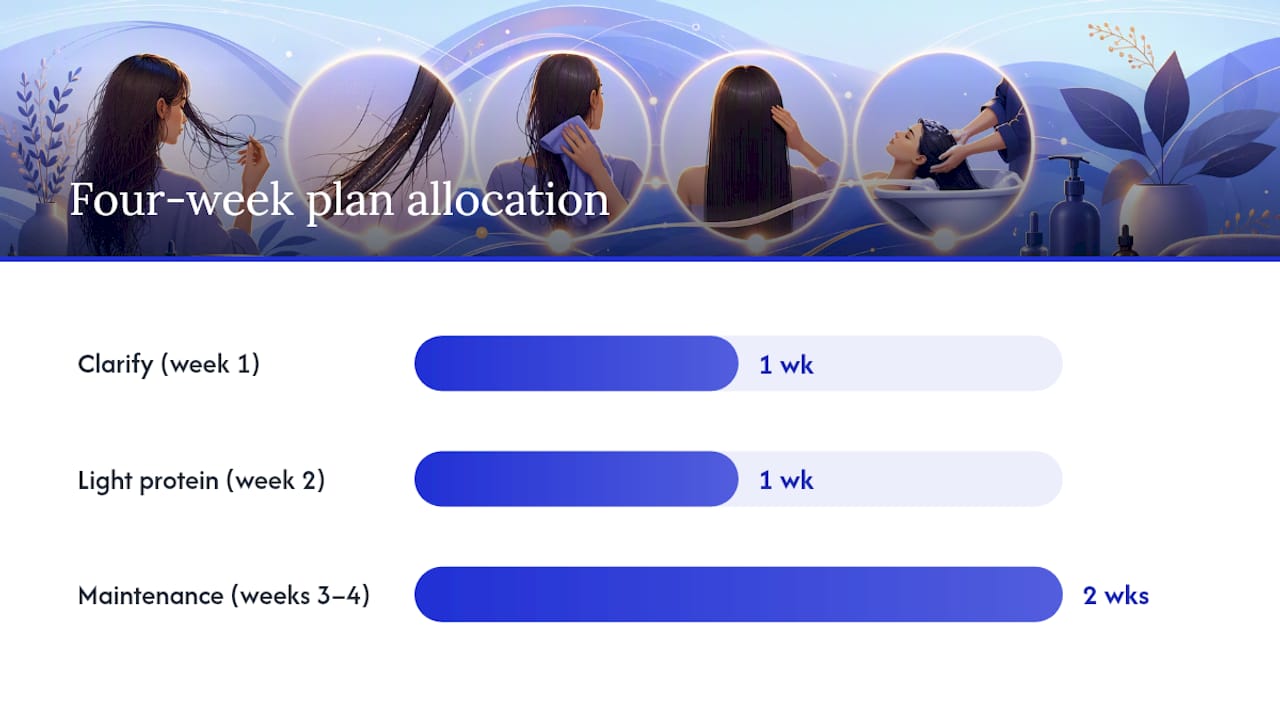
- A sample four-week plan: clarify in week one to clear buildup, add a light hydrolysed protein treatment in week two, then maintain with a lightweight leave-in and protected heat styling through weeks three and four.
See a stylist if fraying is widespread across the mid-shaft or texture feels uneven from root to tip. That pattern often needs a professional assessment rather than another product swap, and a narrow, careful approach to protein dosing tends to outperform simply using more of it.
Pro Tip: Judge protein by feel, not by the label. If hair feels softer and springier the next day, keep going. If it feels stiff or straw-like, that’s your cue to stop and hydrate instead.
What a lightweight fine-hair routine looks like in practice
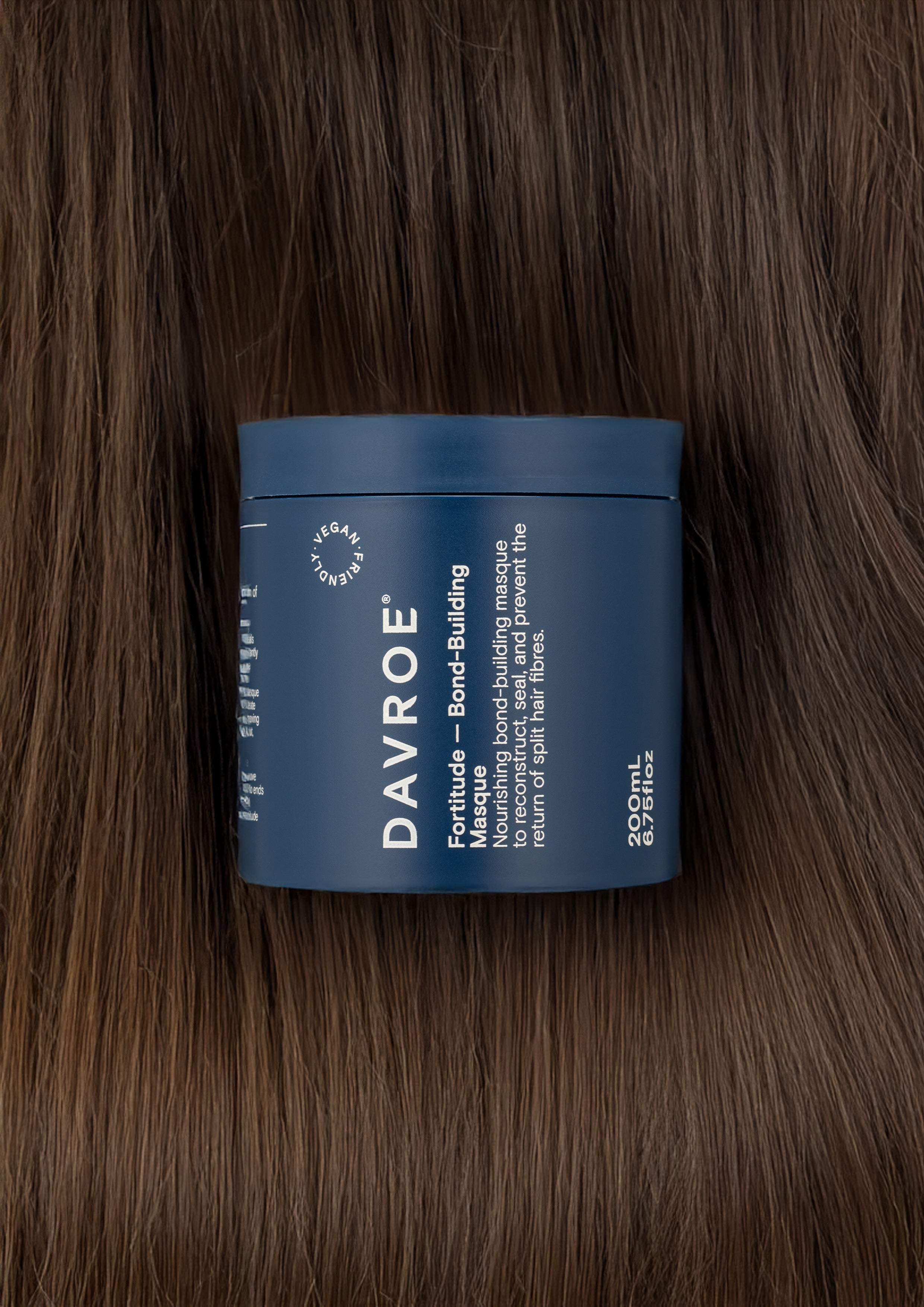
Gentle maintenance week: wash with a light volumising shampoo, condition ends only, finish with a light leave-in like Davroe Ends Repair Leave-In Treatment on damp ends before air-drying to 75%.
Repair week: after clarifying, apply a small dose of Rebuilder Protein Hair Rebuilder to mid-lengths and ends, rinse fully, then follow with a lightweight conditioner to rebalance moisture.
Travel or minimalist routine: pack the leave-in treatment alone for daily touch-ups between washes, skipping heavy oils that build up quickly in humid or dry travel conditions.
Always patch-test a new product on a small section first, and judge results by feel over the following day, not by how the label reads.
What actually matters, and what doesn’t
If I had to rank priorities for fine hair, friction reduction comes first, lightweight formulation second, and measured protein dosing third. Most people get this backwards: they reach for stronger protein treatments before fixing the tight ponytail or rough towel-drying that’s causing the damage in the first place.
The most common overcorrection I see is over-conditioning, followed closely by using heavy protein treatments too often because a label promises “repair.” Chasing ingredient lists rarely beats simply changing one habit and watching what happens. Pick a single change, run it for a month, and judge by how your hair feels and looks, not by what you expected to happen.
— Burgs
How Prohair fits into a fine-hair routine
Prohair exists so you can get salon-grade, lightweight formulas without guessing your way through a shelf of products built for thicker hair. Everything in this guide, from gentle clarifying shampoos to small-dose bond builders, is available through Prohair’s online store, trusted by over 500 salon accounts across New Zealand and shipped free on orders over $100.
If you’re starting a repair week, the Davroe Ends Repair Leave-In Treatment is a practical first buy: it’s light enough for daily use on ends without flattening fine hair. Pair it with Rebuilder Protein Hair Rebuilder once a week if your stretch test points to protein need, not moisture. For broader routine ideas beyond breakage, from managing frizz to protecting hair from humidity, Prohair’s other guides cover the full range of fine and fragile hair concerns.
Browse the ends repair treatment and rebuilder pages on the online store to find products that suit your current routine; shipping policies apply as stated on the website.
Sources
- How to care for fine hair (Elle UK)
- Hair science review (NCBI PMC)
- PubMed review on hair damage mechanisms
- Fine hair care tips (RealSimple)
FAQ
Why is my hair so thin and breaking off?
Fine hair has a smaller diameter with less cortex and fewer cuticle layers, so it reaches its breaking point under far less tension than thicker hair. Add habits like tight elastics, rough towel-drying, or frequent heat styling, and breakage accelerates quickly.
Can broken hair grow back?
A broken strand won’t reattach or repair itself, but the follicle underneath keeps producing new hair as long as it’s healthy. Reduce the tension and friction causing new breaks, and you’ll see fresh growth filling in over several months.
What vitamin deficiency causes hair breakage?
Breakage is usually mechanical rather than nutritional, but ongoing deficiencies in iron, biotin, or protein intake can weaken new hair growth over time. If your diet is balanced and breakage persists, a GP visit to rule out deficiency is worth it before assuming it’s technique.
Which hair type has the most breakage?
Fine hair is generally the most breakage-prone type because of its thinner diameter and lower cortex volume, which means it fails under lower mechanical loads than medium or coarse hair. Chemically treated or heat-styled fine hair sees this effect compounded further.