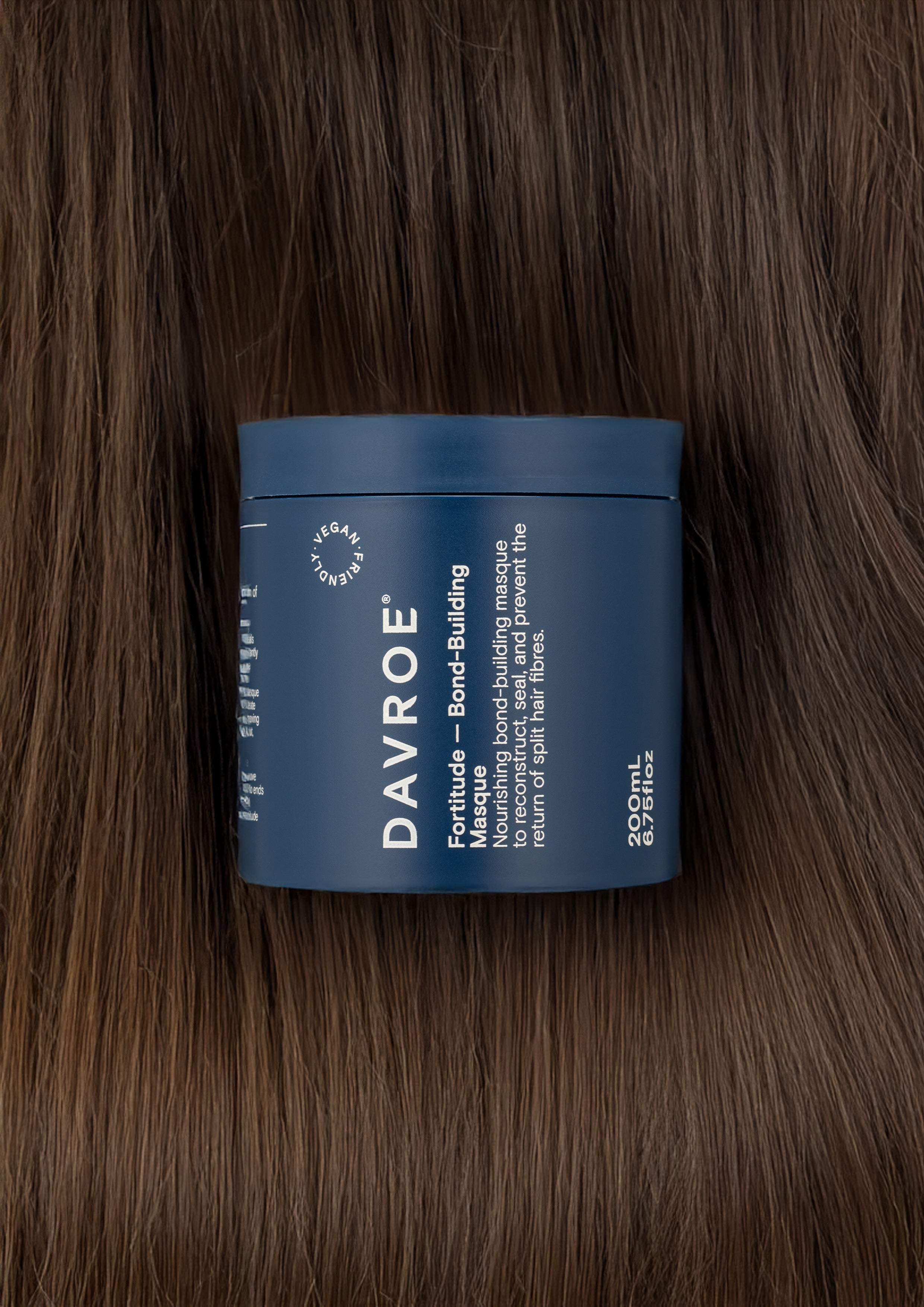


Clarifying shampoo strips product and mineral buildup with strong surfactants; detox shampoo does a gentler, broader reset using clays or chelators. Use clarifying weekly to monthly for routine buildup, detox occasionally for deeper resets.
- Choose clarifying when hair feels waxy, flat, or coated after heavy styling product use.
- Choose detox when dullness persists despite regular washing, or hard water and pollutants are the suspects.
Go gently around colour treatments either way — both can accelerate fade if overused.
Key Takeaways
Clarifying shampoo removes surface buildup with strong surfactants, while detox shampoo uses clays or chelators for a deeper, gentler reset against minerals and pollutants.
| Point | Details |
|---|---|
| Core difference | Clarifying uses strong surfactants; detox relies more on clays, chelators, and adsorbents. |
| Frequency matters | Clarify weekly to monthly depending on product use and water hardness. |
| Colour caution | Wait several weeks after a colour service before clarifying to protect vibrancy. |
| Hard water needs chelators | Bonded minerals often need a chelating detox, not just a stronger surfactant. |
| Prohair’s picks | Davroe Clarify Deep Cleansing Shampoo and KOBO Capital Purifying Shampoo cover both needs, salon-grade. |
Table of Contents
- What is clarifying shampoo?
- What is a detox shampoo, and how is it different?
- Sulfates, clays and chelators: reading the label
- Signs your hair needs one or the other
- Who should be careful with clarifying or detox shampoo
- How often should you clarify or detox?
- How to use a clarifying or detox shampoo properly
- Choosing between clarifying and detox in the shower
- Salon-grade clarifying and purifying shampoos worth trying
- Sources
- FAQ
What is clarifying shampoo?
Clarifying shampoo is a stronger cleanser built to strip away what your regular shampoo leaves behind. It targets styling product residue, hard-water mineral deposits, and chlorine from the pool, restoring hair’s natural texture and shine in a single wash, according to Byrdie’s advice from professional stylists.
The formula usually relies on sulfates or other high-strength surfactants that lift oil and residue far more aggressively than a daily shampoo. That is exactly why it works so fast, and exactly why it can go too far if you reach for it too often.
Expect hair that feels lighter and looks noticeably shinier straight after rinsing. If it starts feeling “squeaky” or rough to the touch, that is a sign the formula stripped past buildup and into your hair’s natural oils.
- Best for: swimmers, heavy product users, hard-water households.
- Less suited to: fine, dry, or chemically treated hair used weekly without a moisture follow-up.
Pro Tip: Always follow a clarifying wash with a proper conditioner. Stripped hair drinks up moisture and treatment ingredients far more effectively than hair still coated in product residue.
What is a detox shampoo, and how is it different?
A detox shampoo takes a broader approach. Rather than blasting through buildup with sheer cleaning power, it uses ingredients designed to draw out impurities: think bentonite clay, activated charcoal, or chelating agents that bind to minerals and pollutants and rinse them away.
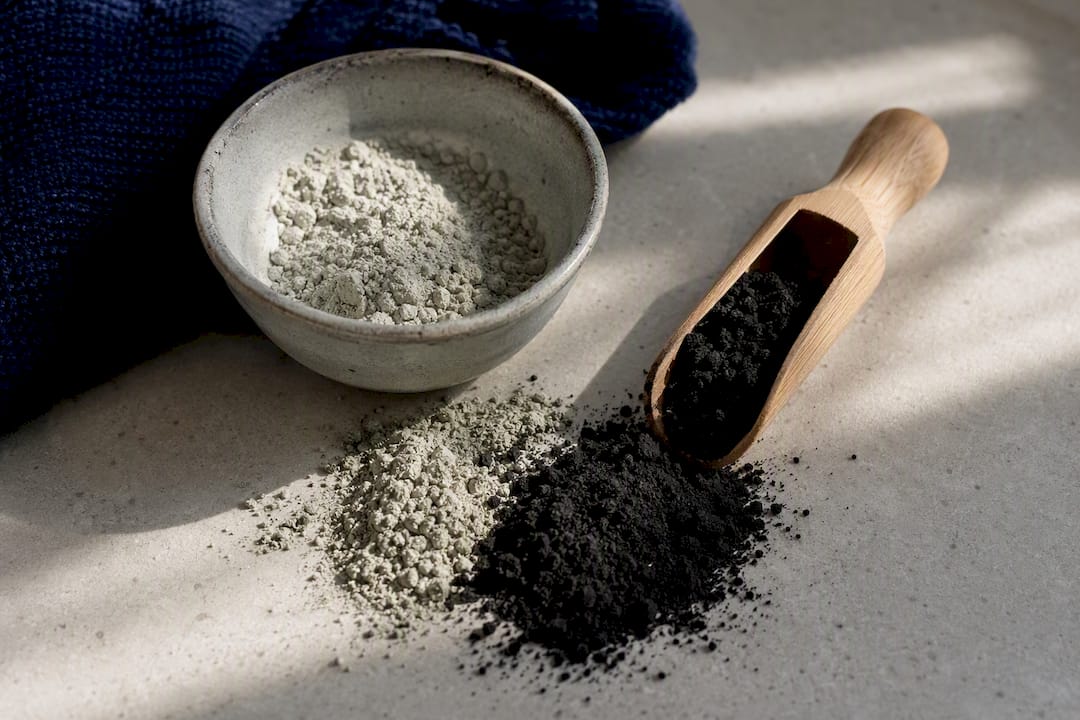
The goal overlaps with clarifying shampoo. Both remove residue, oil, and minerals, but they usually get there with different active ingredients. Detox formulas often lean on clays and chelators rather than the heavy-duty surfactants found in a typical clarifier, according to Healthline’s breakdown of clarifying shampoo.
Many detox formulas also fold in conditioning elements, like botanical oils alongside the clay, so the wash can feel less drying than a straight clarifying shampoo even while pulling a comparable depth of clean.
| Factor | Clarifying shampoo | Detox shampoo |
|---|---|---|
| Primary action | Strong surfactants, fast strip | Clays, chelators, adsorbents |
| Feel after use | Can feel squeaky clean | Often feels softer, less stripped |
| Best target | Product buildup, chlorine | Pollutants, heavy minerals, sebum |
| Added conditioning | Rarely | Sometimes built in |
Sulfates, clays and chelators: reading the label
Clarifying shampoos usually list sodium lauryl sulfate or sodium laureth sulfate near the top of the ingredient list. These surfactants dissolve oil and product film fast, which is the whole point of a clarifying wash.
Detox formulas read differently. Look for bentonite clay, activated charcoal, or EDTA (a common chelating agent) that binds to metal ions and hard-water minerals rather than simply washing over them.
- Sulfates and strong surfactants: fast, thorough, but can dry hair with repeated use.
- Clays and adsorbents: pull out impurities without the same harsh strip.
- Chelators (EDTA and similar): specifically target bonded minerals from hard water.
Pro Tip: Ingredient order matters. If a “detox” shampoo lists a sulfate first and clay somewhere near the bottom, it’s leaning closer to a clarifier in disguise.
Signs your hair needs one or the other
Everyday buildup shows itself fast: hair feels limp by day two, styling product never quite washes out, or your usual shampoo stops lathering the way it should. Swimmers dealing with a green tinge from chlorine are a classic case for clarifying shampoo, which reliably reverses that discolouration.
Detox treatments earn their place when the dullness doesn’t budge no matter how often you wash. That is often hard water at work. Simple surfactants struggle to shift calcium, magnesium, or copper once they’ve bonded to the hair shaft, and a chelating treatment is usually what finally clears it, per Colour Lab Salon’s analysis of hard-water buildup.
- Weekly styling product users: clarify regularly.
- Swimmers: clarify after pool sessions.
- Hard-water households: detox with a chelating formula.
- Infrequent product users: detox occasionally, not weekly.
Pro Tip: If your hair still looks dull after switching to a clarifying shampoo for a month, the problem is likely mineral buildup, not product residue. Time to try a chelating detox instead.
Who should be careful with clarifying or detox shampoo
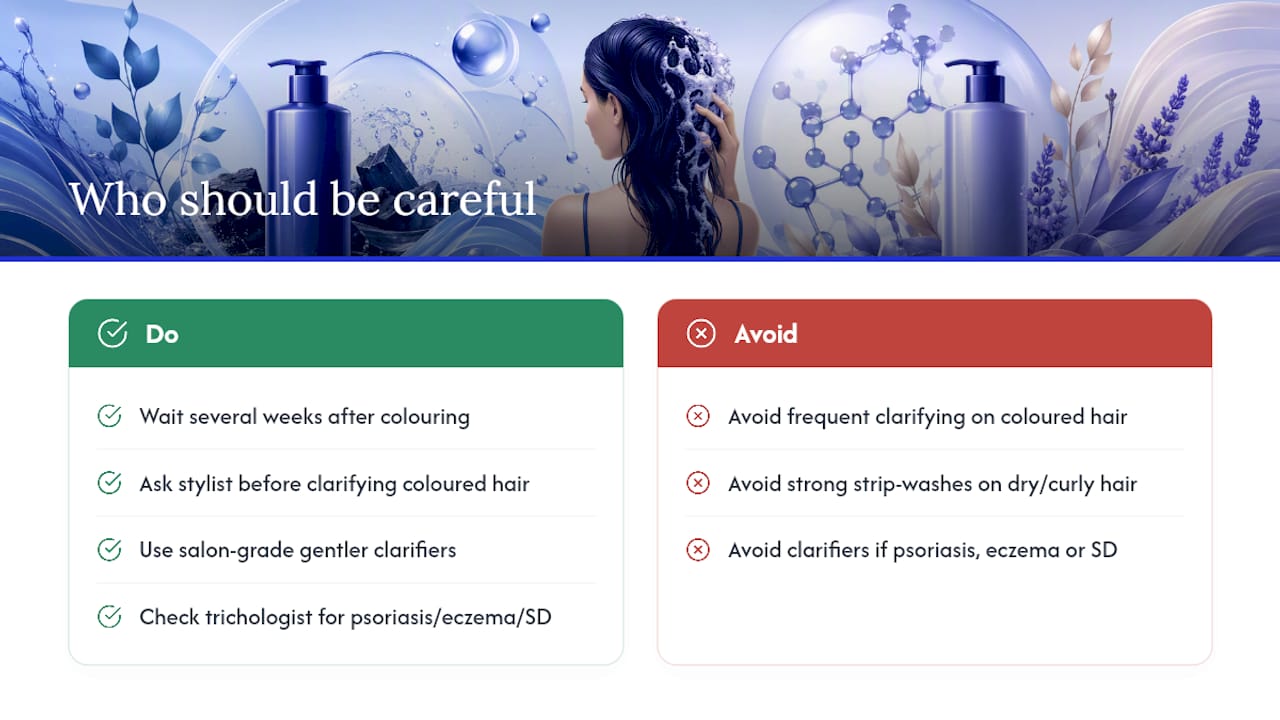
Colour-treated hair is the biggest risk zone. Overusing a clarifying shampoo can speed up colour fade and disturb the scalp barrier, so stylists generally recommend waiting several weeks after a colour service before reaching for one.
Dry, curly, or textured hair also needs a lighter touch. These hair types rely on natural oils for structure, and a strong strip wash can leave curls frizzy and brittle.
Colourists note that professional-grade clarifiers exist that are noticeably gentler on colour than many supermarket sulfate formulas. Salon-grade options, or a quick chat with your stylist, are worth it before you clarify colour-treated hair.
Pro Tip: If you have psoriasis, eczema, or seborrheic dermatitis, check with a trichologist before adding a clarifying or detox step. Strong surfactants can aggravate an already sensitive scalp.
How often should you clarify or detox?
Most stylists recommend clarifying somewhere between once a week and once a month, depending on how much product you use, how hard your water is, and your natural hair type, according to Byrdie’s professional guidance.
Practitioners generally scale that up or down by exposure. Swimmers and heavy product users can often clarify frequently without issue, while people using minimal styling product might only need it occasionally.
- Swimmers: weekly clarifying wash.
- Daily styling product users: weekly to fortnightly.
- Minimal product users: monthly, or roughly every 4 to 8 weeks.
- Around colour services: wait several weeks before clarifying to protect colour vibrancy.
Detox treatments generally sit at the lower end of that range too, used as an occasional deep reset rather than a weekly habit.
How to use a clarifying or detox shampoo properly
- Wet hair thoroughly with warm water before applying anything.
- Apply the shampoo directly to the roots and scalp, where buildup concentrates.
- Lather once, rinse, then lather a second time only if hair still feels coated.
- For heavier mineral or product buildup, let the formula sit for a minute before rinsing.
- Rinse thoroughly until water runs completely clear.
Aftercare matters as much as the wash itself. Follow up with a deep conditioning treatment to replace moisture the wash removed.
- Colour-treated hair: use a moisture-focused conditioner, not a protein treatment, straight after clarifying.
- Curly or damaged hair: a leave-in treatment helps offset any extra frizz from the strip.
Choosing between clarifying and detox in the shower
If your hair feels coated, flat, or product-heavy, reach for a clarifying shampoo. If it stays dull despite regular washing, or you live somewhere with hard water, a detox treatment is the better call.
- Fine hair: clarify sparingly to avoid stripping natural volume-supporting oils.
- Curly hair: lean detox, and always follow with a rich conditioner.
- Colour-treated hair: space clarifying out and choose salon-grade formulas that are gentler on colour.
Pro Tip: You don’t have to pick one forever. Many people clarify weekly for product buildup and add a detox treatment monthly for the mineral load that a surfactant alone won’t shift.
Salon-grade clarifying and purifying shampoos worth trying
For everyday buildup, the Davroe Clarify Deep Cleansing Shampoo is built for styling residue and hard-water minerals, best used once a week or after heavy product days.
For a gentler purifying option, the KOBO Capital Purifying Shampoo balances cleansing with conditioning, suited to those who want a reset without the squeaky strip.
If your hair leans dry after either treatment, the Davroe Moisture Senses Shampoo is the moisture-focused follow-up to bring softness back between resets.
- Davroe Clarify Deep Cleansing Shampoo: weekly reset for buildup and mineral residue.
- KOBO Capital Purifying Shampoo: milder purifying option with added conditioning.
- Davroe Moisture Senses Shampoo: hydration top-up for hair that feels dry after clarifying.
| Product | Best for | Usage frequency |
|---|---|---|
| Davroe Clarify Deep Cleansing Shampoo | Product and mineral buildup | Weekly |
| KOBO Capital Purifying Shampoo | Gentle purifying reset | Fortnightly |
| Davroe Moisture Senses Shampoo | Post-clarify hydration | As needed |
How salons actually sequence these treatments
In salon practice, the choice usually comes down to strength, timing, and what happens next. Stylists reach for professional-grade chelators when hard water or heavy metal buildup is the real culprit, since a standard surfactant alone often can’t shift bonded minerals. Aftercare is never optional; it decides whether the reset helps or hurts.
Try a salon-grade reset without the guesswork
Skip the trial and error of matching random supermarket shampoos to your hair’s actual problem. Prohair stocks the same salon-grade clarifying and purifying formulas trusted by over 500 salon accounts across New Zealand, so you get a professional-strength reset delivered straight to your door.
Whether your hair needs a weekly clarify for product buildup or a gentler purifying wash for a softer reset, Prohair’s range covers both without you having to guess which supermarket bottle might work. Browse the Davroe Clarify Deep Cleansing Shampoo and pair it with a deep conditioning rinse to protect moisture levels, and orders over $100 ship free.
Sources
- What Is Clarifying Shampoo—and How To Use It, From Pros
- Clarifying Shampoo: Benefits, Risks, How To, Costs, and More
- DETOX vs. CLARIFYING? – Colour Lab Salon
FAQ
Is detox shampoo the same as clarifying shampoo?
No. Both remove buildup, but clarifying shampoo relies on strong surfactants while detox shampoo typically uses clays, chelators, or natural adsorbents for a gentler, broader reset.
How can I tell if my hair needs clarifying?
Look for limp, flat hair, product that won’t rinse out, or a dull green tinge after swimming. All point to buildup a regular shampoo can’t shift.
Who shouldn’t use clarifying shampoo?
People with colour-treated, dry, curly, or scalp-condition-affected hair should use it sparingly, or choose a salon-grade formula that is gentler on colour and moisture levels.
Do I actually need a clarifying shampoo?
If your hair feels coated, flat, or stops lathering properly, yes. If your water is hard and dullness persists despite washing, a detox treatment is likely the better fit.
How often should I clarify coloured hair?
Wait several weeks after a colour service, then clarify sparingly, roughly once every 4 to 8 weeks, and always follow with a moisture-focused conditioner.