
Yes, you can wake up with beautiful, natural curls without touching a single heat tool. The most reliable overnight methods are the silk or satin curling rod, flexi rods, robe-tie wraps, sock wraps, the scrunchie method, and Velcro rollers. Each one works by setting damp hair into a shape as it dries, so you wake up with curls that hold without any heat damage.
Here’s a quick look at who each method suits best:
- Silk/satin curling rod: Best for medium to long hair; gives soft, bouncy waves with the most comfort overnight.
- Flexi rods: Best for medium to long hair wanting defined spirals; slightly less comfortable for side sleepers.
- Robe-tie wrap: Best for long hair; great DIY option, produces soft waves, but can slip on fine hair.
- Sock wraps: Best for medium to long hair; budget-friendly, surprisingly effective for loose waves.
- Scrunchie method: Best for medium hair wanting a quick, low-tension set; produces soft, relaxed curls.
- Velcro rollers: Best for short to medium hair needing volume; better for daytime sets than sleeping in.
- Twist-and-clip / pin curls: Best for short to medium hair; great definition, very flat to the head for sleeping.
The bottom line: silk rods and flexi rods give the most consistent, salon-like results overnight, while DIY options like robe ties and socks are great for a low-cost first attempt. Comfort versus curl definition is the core trade-off you’ll navigate with every method.
Key Takeaways
| Point | Details |
|---|---|
| Best methods for most people | Silk/satin rods and flexi rods give the most consistent, salon-like overnight results. |
| Moisture level matters most | Start at about 85% dry; fully wet hair sets unevenly, fully dry hair won’t take a curl. |
| Apply product before wrapping | A light curl balm or hold gel before wrapping helps the curl shape set as hair dries. |
| Comfort determines success | Match the method to your sleep position; soft tools and a satin pillowcase prevent breakage and slippage. |
| Prohair for prep and finish | The Davroe CURLiCUE range covers every step, from smoothing shampoo to curl balm and finishing oil. |
Table of Contents
- Which heatless curls overnight method is right for you?
- How to prep your hair for the best overnight results
- How to sleep comfortably without losing your set
- How to remove your set and make curls last all day
- Which method suits your hair type and lifestyle?
- Troubleshooting common heatless curl problems
- Salon-grade products that improve your heatless curl results
- What I actually learned from testing these methods
- Prohair’s salon-grade curl products, delivered to your door
- Sources
Which heatless curls overnight method is right for you?
Who What Wear’s hands-on testing shows that satin and silk rods often deliver salon-like, long-lasting waves overnight, while flexi rods can give tighter spirals but may be less comfortable to sleep in. Knowing what each method actually does before you commit to a night of it saves a lot of frustration.
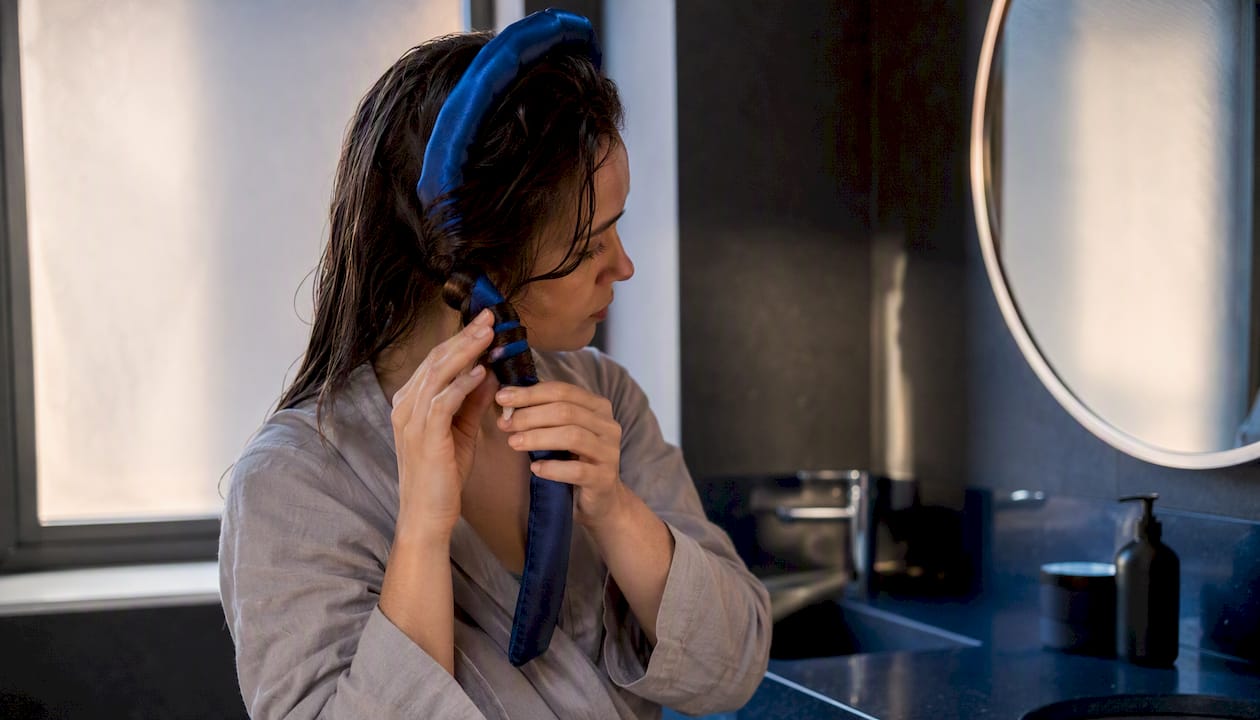
Silk/satin curling rod (or silk curling ribbon)
Materials: A silk or satin curling rod kit (like the Kitsch Silk Heatless Curling Set), a few soft scrunchies or clips.
- Start with hair that is mostly dry. Mist lightly if it has dried fully.
- Place the rod at the top of your head, running front to back.
- Take a section from one side, wrap it around the rod in a downward spiral, and secure the end with a soft scrunchie.
- Repeat on the other side.
- Secure the rod at the nape with a loose tie. Sleep on a satin pillowcase.
- In the morning, gently slide the rod out and finger-separate.
Best for: Medium to long, straight to wavy hair. Time: Overnight. Expected look: Soft, bouncy waves with natural movement. Pros: Very comfortable, minimal slippage, reusable. Cons: Less defined than flexi rods; fine hair may need a light hold product to keep the set.
Flexi rods
Materials: Flexi rods in small (tight spirals), medium (defined curls), or large (loose waves) sizes.
- Section damp hair into 1–2 inch pieces.
- Starting at the ends, wrap each section around a flexi rod, rolling upward toward the root.
- Bend both ends of the rod inward to secure.
- Repeat across the whole head.
- Sleep on a satin pillowcase or wear a satin bonnet.
- Unwrap gently in the morning, starting from the root end.
Best for: Medium to long hair wanting defined spirals. Smaller rods work well on shorter lengths. Time: Overnight. Expected look: Tight spirals (small rods) to defined curls (medium rods). Pros: Highly customizable curl size, strong hold. Cons: The rod ends can press into your scalp; side sleepers often find them uncomfortable.
Pro Tip: Use medium or large flexi rods if you plan to sleep on your side. The smaller the rod, the more pressure points you’ll feel.
Robe-tie wrap (bathrobe sash)
Materials: A soft cotton or microfiber bathrobe belt/sash.
- Drape the sash over the top of your head, front to back, like a headband.
- Take a section from one side, wrap it around the sash, and continue wrapping downward along the length.
- Repeat on the other side, alternating sections as you work toward the ends.
- Tie the ends of the sash loosely at the nape.
- Sleep on a satin pillowcase.
Best for: Long hair; produces soft, romantic waves. Time: Overnight. Expected look: Loose, flowing waves. Pros: Zero cost if you own a robe, very soft contact surface. Cons: Can slip on fine or silky hair; Byrdie’s method roundup notes that DIY approaches like this one sometimes need technique adjustments and may work better for short daytime sessions on certain hair lengths.
Sock wraps
Materials: Two clean tube socks (the longer, the better).
- Divide hair into two sections, one on each side.
- Hold a sock at the end of one section and begin rolling the hair around the sock, working upward toward the root.
- Tie the sock ends together at the root to secure.
- Repeat on the other side.
- Sleep with a satin bonnet or on a satin pillowcase.
Best for: Medium to long hair wanting loose waves on a budget. Time: Overnight. Expected look: Soft, relaxed waves. Pros: Free, soft, and comfortable. Cons: PopSugar’s editor experiment with sock curls cautions that overly tight rolling increases mechanical stress and breakage risk, so keep the tension gentle.
Scrunchie method
Materials: Two to four wide, fabric scrunchies.
- Divide hair into two sections.
- Twist each section loosely, then wrap it into a bun shape and secure with a scrunchie.
- For more defined curls, divide into four sections and create four smaller buns.
- Sleep as normal; the flat bun shape sits comfortably against the head.
Best for: Medium hair wanting soft, relaxed curls with minimal fuss. Time: Overnight. Expected look: Soft, undone waves. Pros: Very comfortable, no hard edges, great for beginners. Cons: Less definition than rods; results can be inconsistent on very straight or very thick hair.
Velcro rollers
Materials: Velcro rollers in medium or large sizes.
- Section hair into 2-inch pieces.
- Roll each section from the ends up to the root and press the roller against the scalp to grip.
- Use clips to secure if needed.
- Leave in for 2–4 hours (daytime) or overnight if you can sleep comfortably.
Best for: Short to medium hair needing volume at the root. Time: 2–4 hours is usually enough. Expected look: Voluminous, bouncy waves. Pros: Great for adding lift, reusable, easy to use. Cons: Editor testing found Velcro rollers are better suited to short daytime sessions than sleeping in, as the grip surface can snag hair and cause discomfort overnight.
Twist-and-clip / pin curls
Materials: Bobby pins or small claw clips.
- Take a small section of damp hair and twist it tightly from root to tip.
- Coil the twisted section flat against the head and secure with a bobby pin or clip.
- Repeat across the whole head, working in rows.
- Sleep as normal; the flat coils sit close to the scalp.
Best for: Short to medium hair wanting defined curls. Time: Overnight. Expected look: Tight, defined curls or waves depending on section size. Pros: Very flat to the head, great for short hair, no special tools needed. Cons: Pinning takes time; clips can dig in if placed too tightly.
How to prep your hair for the best overnight results
Getting the moisture level right is the single biggest factor in whether your curls hold or fall flat. Marie Claire’s expert guidance is clear: start with hair that is about 80–90% dry. Fully wet hair takes too long to dry overnight and often sets unevenly, leaving you with limp, misshapen waves. Fully dry hair won’t take a set at all without a light mist of water or a texturizing spray first.
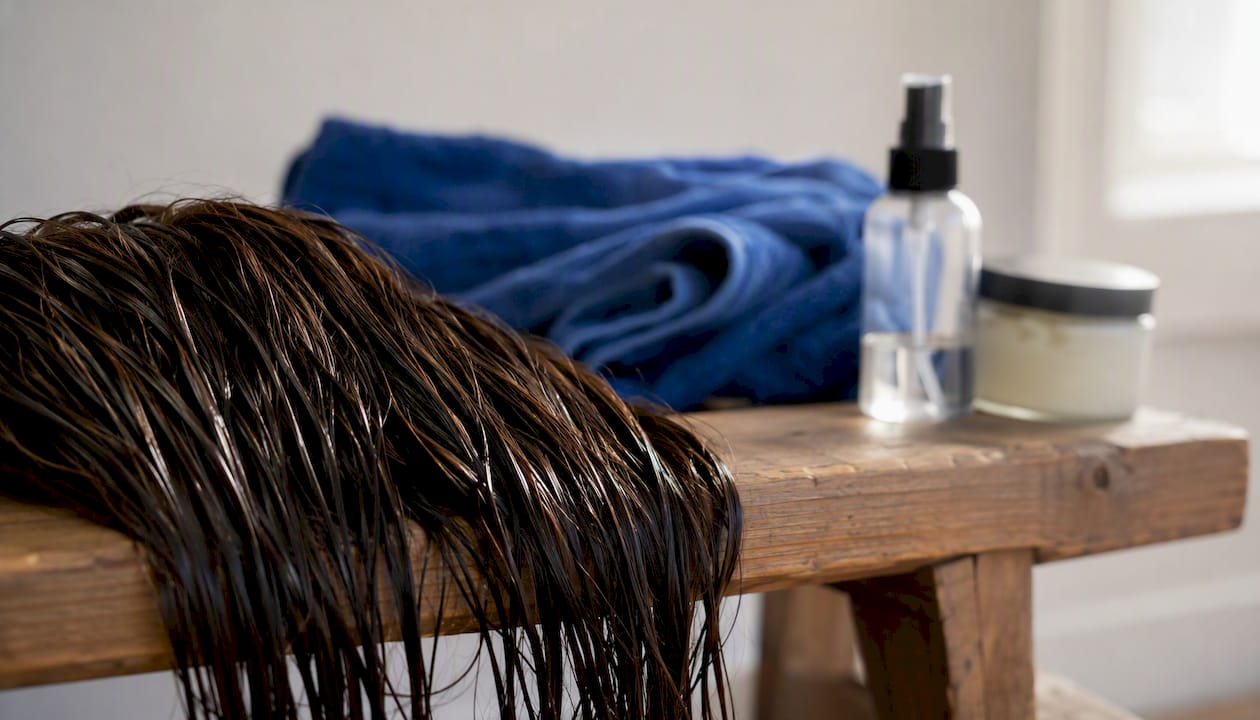
The right products make a real difference. Apply a lightweight hold product before wrapping, not just after removal. A light leave-in conditioner, curl cream, or flexible-hold gel applied to slightly damp hair helps the curl shape set into the hair fiber as it dries. A curl-defining balm works well here, adding structure without weighing hair down. Avoid heavy oils before wrapping; they slow drying and reduce hold.
Professional stylists also point out that hair condition matters at the base level. Oily or product-heavy hair holds heatless sets poorly, so starting with a clean, smooth base from a quality smoothing shampoo and conditioner gives you a better canvas to work with.
Setting time at a glance:
| Set type | Time required | Notes |
|---|---|---|
| Partial/daytime set | 2–4 hours | Works for Velcro rollers and scrunchie method; best for loose waves |
| Full overnight set | overnight | Recommended for all rod and wrap methods; maximizes hold |
| Unwrapping rule | Only when fully dry | Unwrapping damp hair causes immediate curl drop |
Glamour’s expert guidance reinforces the timing point: leave sets in for several hours at minimum, preferably overnight, and only unwrap when hair is completely dry. A microfiber hair wrap used for 10–15 minutes before setting can speed up the drying process, getting you closer to that 85% dry sweet spot faster.
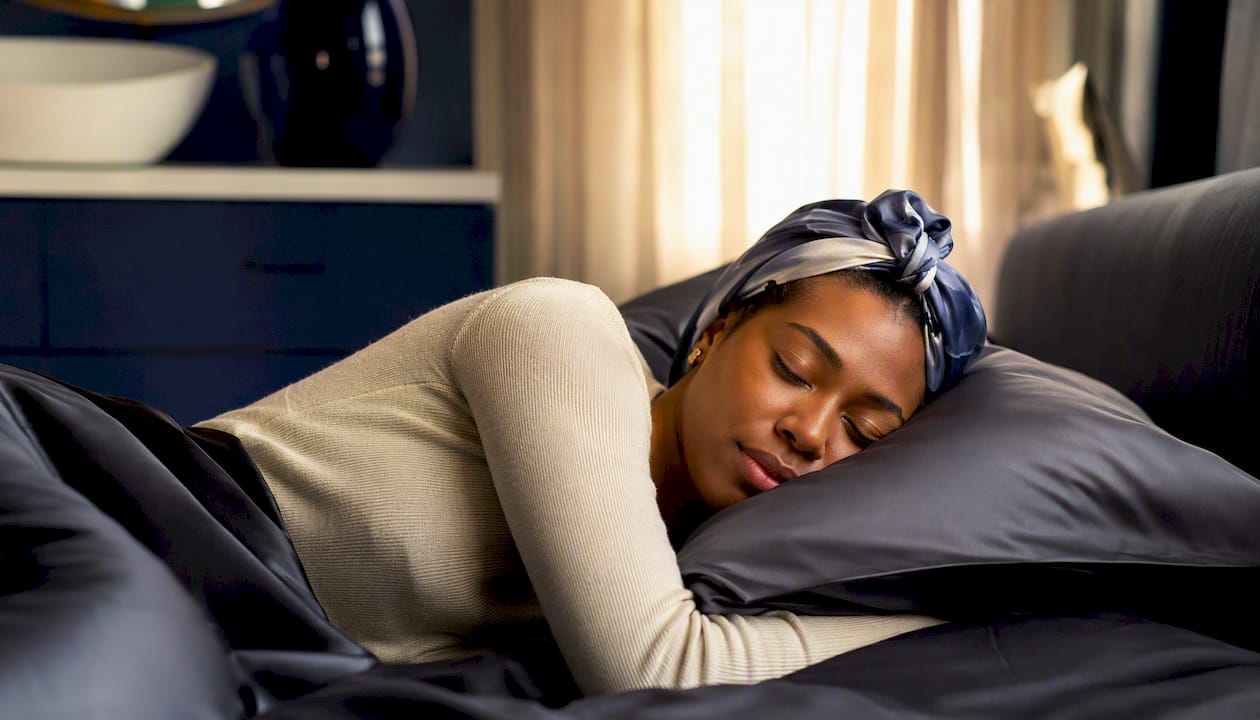
How to sleep comfortably without losing your set
Comfort is one of the biggest barriers to sticking with heatless curl methods. The good news is that small adjustments to how you sleep make a significant difference.
By sleep position:
- Back sleepers: A front-to-back rod or wrap (like the silk rod method) sits flat and stays in place well. Cross the ends at the nape and secure loosely.
- Side sleepers: The “unicorn” wrap, where the rod or wrap runs along the top of the head front to back, keeps the sides clear of pressure. Flexi rods on the sides of the head can dig in, so consider pin curls on the sides instead.
- Stomach sleepers: This is the toughest position. Stick to the scrunchie method or pin curls, which sit flat against the head and don’t create pressure points.
Protecting your hair from mechanical damage overnight is just as important as the method itself. PopSugar’s reporting cautions that overly tight or rigid overnight wraps increase mechanical stress and the risk of breakage. Keep tension gentle throughout the wrap, use soft tools wherever possible, and avoid tight elastics that crease or snap hair.
Sleeping on a satin or silk pillowcase reduces friction against your wrapped hair significantly. If you move around a lot at night, a satin bonnet is even more reliable — it keeps every method in place and protects the set from cotton pillowcase friction that causes frizz and slippage.
Pro Tip: Test any new method for two nights before judging the results. The first night you’re learning the wrap; the second night you’ll sleep more naturally and get a truer picture of what the method can do.
How to remove your set and make curls last all day
How you take down a heatless set matters almost as much as how you put it in. Rush the removal and you’ll undo hours of work in two minutes.
- Wait until hair is completely dry. Press a section between your fingers; if it feels even slightly cool or damp, leave the set in longer.
- Remove tools slowly. Unclip, unroll, or unwrap each section gently, working from the root end downward. Never yank or pull.
- Finger-separate only. Use your fingers to gently loosen each curl. Do not brush or comb immediately after removal; a brush will break up the curl pattern and create frizz.
- Scrunch lightly. Cup each section and scrunch upward to encourage the curl to spring back into shape.
- Apply a finishing product. A light mist of flexible-hold spray or a small amount of lightweight oil worked through the ends adds shine and seals the shape without crunch. A hydrating curl oil through the ends smooths frizz and adds definition without weighing curls down.
- Let curls cool and set for 5–10 minutes before touching them again.
For day-two refresh:
- Loosely braid hair before bed to preserve the curl pattern overnight.
- In the morning, mist roots lightly with water and scrunch to reactivate.
- Apply dry shampoo at the roots for volume and to absorb any oil.
- A small amount of curl cream or balm scrunched through the mid-lengths refreshes definition without re-wetting the whole style.
Which method suits your hair type and lifestyle?
Matching the method to your hair profile saves you from a frustrating first attempt. Here’s a practical guide:
Quick decision rules:
- Fine hair: Stick to the silk rod or scrunchie method. Heavy rods or tight wraps can cause breakage on fine strands.
- Coarse or thick hair: Flexi rods or robe-tie wraps give enough tension to set the curl. Use a light hold gel before wrapping.
- Short hair (above the shoulder): Twist-and-clip pin curls or small flexi rods work best. The silk rod method requires at least shoulder-length hair.
- Long hair: Any method works. Silk rods and robe ties are the most comfortable for long, heavy hair overnight.
- Frequent side sleeper: Silk rod (unicorn wrap) or scrunchie method. Avoid large flexi rods on the sides.
- Wants maximum definition: Flexi rods or pin curls.
- Wants maximum comfort: Scrunchie method or silk rod.
- Budget-conscious: Robe tie, socks, or scrunchies cost nothing extra.
Cost and reusability:
Troubleshooting common heatless curl problems
Even with the right method, results don’t always land perfectly the first time. Here’s how to fix the most common issues:
- Flat roots: The wrap didn’t start close enough to the scalp. Next time, begin wrapping within half an inch of the root. A spritz of dry shampoo at the root before styling adds lift immediately.
- Limp ends: Sections were too large near the ends, or the ends weren’t fully wrapped. Use smaller sections at the ends and make sure every strand is tucked into the wrap.
- Frizz: Hair was too wet when wrapped, or you used a cotton pillowcase. Start drier next time and switch to satin. A small amount of curl cream before wrapping also helps.
- Creases instead of curls: The elastic or clip was too tight, or you used a hard-edged tool. Switch to soft scrunchies and fabric-covered tools.
- Uneven curl pattern: Some sections dried faster than others, or section sizes varied too much. Keep sections consistent and apply product evenly before wrapping.
- Curls dropped within an hour: Hair wasn’t fully dry when you unwrapped. Leave the set in longer, even if it means waiting an extra 30 minutes after waking up.
- Curl is too tight: Use a larger rod or take bigger sections. Larger sections always produce looser waves.
When results are consistently soft rather than defined, the fix is usually a combination of smaller sections, a light hold product before wrapping, and full dryness before removal, as Marie Claire’s experts note these are the three most common beginner errors.
Salon-grade products that improve your heatless curl results
The right products at the right stage of the process make a measurable difference in hold, frizz control, and hair health. Here’s what to use and when:
- Smoothing shampoo and conditioner (pre-wash): A clean, smooth base reduces frizz before you even start. The Davroe Smooth Senses Anti-Frizz Shampoo and its companion conditioner prep hair to accept curl sets more evenly, especially on frizz-prone hair types.
- Deep conditioning rinse (weekly): Dry or damaged hair holds heatless sets poorly because the cuticle is rough and uneven. A deep conditioning rinse used weekly smooths the cuticle and improves how well curls form and hold.
- Curl balm or gel (before wrapping): Apply a small amount to damp hair before wrapping. The Davroe CURLiCUE Curl Balm adds structure and reduces frizz without stiffness; the Curl Gel gives a firmer hold for coarser hair types.
- Microfiber hair wrap (drying step): Blotting hair with a microfiber wrap for 10–15 minutes before setting gets you to that 85% dry target faster and reduces frizz compared to a standard towel.
- Lightweight curl oil (finishing): A few drops of hydrating oil worked through the ends after removal adds shine, defines curls, and tames any remaining flyaways without weighing the style down.
Pro Tip: Less is more with pre-wrap products. A pea-sized amount of curl balm or a light mist of hold spray is enough. Too much product slows drying and can leave curls feeling sticky or limp.
What I actually learned from testing these methods
The most honest thing you can say about heatless curl methods is that the silk rod is the one worth starting with, especially if you’re new to this. It’s comfortable enough that you’ll actually sleep through the night, and the results are consistently good across a range of hair types. That matters more than it sounds, because a method you abandon at 2 AM because it’s uncomfortable is a method that doesn’t work.
Flexi rods are the better choice when you want real definition, tight spirals, or a result that genuinely looks styled rather than air-dried. But they require a learning curve, and the first night is usually a calibration exercise rather than a success. Stick with them for two nights before deciding they don’t work for you.
The DIY options, robe ties, socks, and scrunchies, are genuinely useful and not just a compromise. They’re softer, cheaper, and often more comfortable than purpose-made tools. The trade-off is consistency: the result varies more from night to night until you’ve dialed in your technique. For anyone who wants predictable results from the start, a purpose-made silk rod kit is worth the modest investment.
One thing that gets underestimated is the role of hair condition. A smoothing, frizz-controlling base from a quality shampoo and conditioner changes the outcome more than most people expect. Hair that’s already smooth and hydrated takes a curl set far more evenly than hair that’s dry, rough, or product-heavy. That’s not a sales point; it’s just what the results show.
Prohair’s salon-grade curl products, delivered to your door
Getting heatless curls right comes down to two things: the right technique and the right products. Prohair carries a full range of salon-grade curl prep and finish products, including the Davroe CURLiCUE line, trusted by over 500 salon accounts, so you get professional-quality results at home without the guesswork of mixing and matching drugstore options.
Whether you need a frizz-smoothing base, a curl-defining balm for pre-wrap hold, or a lightweight finishing oil to seal your style, Prohair has it in one place. Free shipping applies on orders over $100. Browse the full range at Prohair and find the products that fit your overnight curl routine.
Sources
- How to Get Overnight Heatless Curls, According to Experts | Marie Claire
- Heatless Curl Methods, Tried & Tested by Editors | Who What Wear
- TikTok sock curls editor experiment | PopSugar
- DIY heatless curlers guide | Byrdie
- How to use heatless curlers at home, according to top hair experts | Glamour UK